Diving Needs a New Generation. We Are Opening the Door.

New Wave ยท Our mission

Diving Needs a New Generation. We Are Opening the Door.

New Wave is our answer to a simple problem: people get certified, then never take the trip. Nobody tells them what a week at sea is really like. So we are telling them.

Photo: @scubadaan

Why this exists

The sport keeps certifying people it then loses

The average diver in the United States is 42.9 years old. That number comes from DEMA’s 2024 Diving Fast Facts, based on the 2023 DEMA U.S. Diver Study, and it climbs a little every year.

Certifications keep going to people in their twenties. Every summer thousands finish an Open Water course on holiday and come home with a card in their wallet. Most of them never take the next step.

Usually it is not money and it is not interest. A week at sea, on a boat you have never seen, with people you have never met, doing dives nobody has described to you properly โ€” faced with that, another week at a resort feels like the safer choice. The sport loses a diver, quietly, and nobody notices.
What a new diver gets told
Photographs of sharks and coral
A price and a departure date
A list of dive sites they cannot picture
A booking form
What they actually want to know
Whether they are experienced enough
Who they will be sharing a cabin with
What happens if they are seasick
Whether going alone is strange
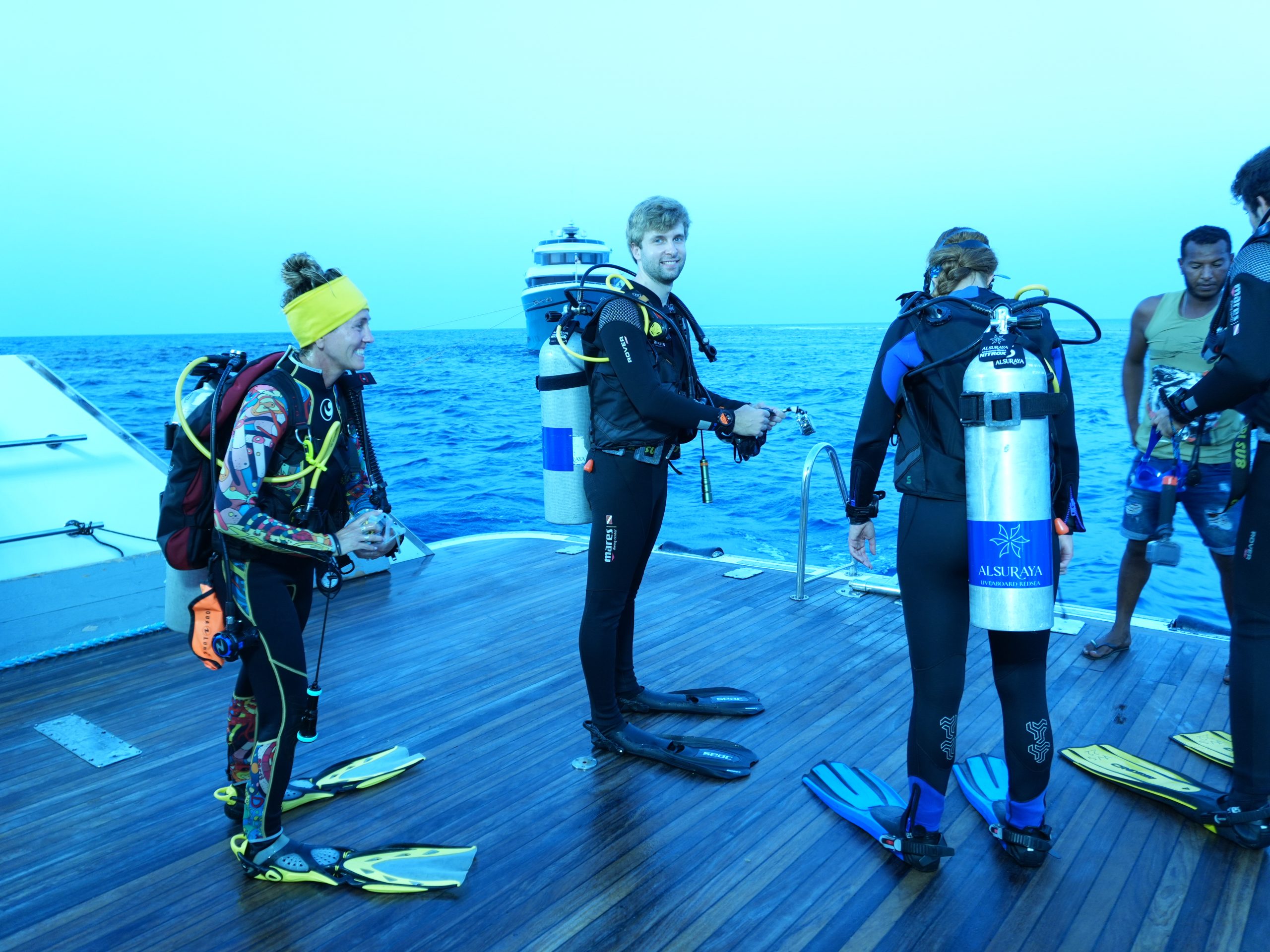
Divers checking equipment and preparing to enter the water from the deck of a Red Sea liveaboard

Photo: @malgosja.zmi

From the founder

“This sport keeps talking to the divers it already has, and those divers are getting older every year. If you are twenty-eight with thirty dives, almost nothing out there was built for you. And walking onto a boat where everyone has two hundred dives and already knows each other is intimidating โ€” nobody says that out loud, but it is true, and it is why people stop. Diving needs young divers. Somebody has to make room for them.”

Sofia Graudin ยท Founder, BookDiveBoat

What we do about it

We put divers on boats and let them tell the truth

Partner operators give us places. We fill them with divers who film, and we ask for the ordinary parts of the week โ€” not the highlight reel that already fills the internet.

๐ŸŽฏ We answer, not advertise

Nobody is asked to sell a trip. They are asked to answer the questions they had before their own first one.

๐ŸŽฌ They keep the edit

The work goes out on their channels, in their voice. Every piece is credited to the person who made it.

๐Ÿ”“ It stays free

All of it is public, on their platforms and ours. No sign-up, no funnel, no gate in front of it.

Every certified diver who never takes the trip is a person the ocean loses an advocate in. That is the part that matters to us. People protect what they have seen.

The answers

Nine questions nobody answers properly

Open any of them.

What does a week on board actually involve?
You wake around six, sit through a briefing, and are in the water before breakfast. Three to four dives across the day, with a long surface interval and a meal between each one. The boat moves to the next site while you eat or sleep. Most people are in bed by ten.
How many dives do you need before you are allowed on?
Most Red Sea itineraries ask for Advanced Open Water and roughly 20 to 30 logged dives. The offshore routes want 50 or more because of the currents and the depth โ€” see our Brothers Islands and Daedalus Reef guides. The northern reef and wreck routes suit a first trip.
Can you go alone?
Most people on board are travelling solo or in a pair. Buddy teams get sorted at the first briefing, and by the second day you have eaten six meals with the same fifteen people. Going alone is the normal case, not the awkward one.
Do you have to share a cabin with a stranger?
The standard fare is a shared twin, matched by gender. Single occupancy is usually available for a supplement, and on quieter departures you sometimes get a twin to yourself anyway. Ask us before you book rather than after.
Do you need your own equipment?
Rental is available on every boat we work with. Bring your own mask and your own dive computer if you bring nothing else โ€” a mask that fits and a computer you can read are the two things that make a week comfortable.
What happens if you get seasick?
The crossings are the worst of it, and most people settle by the second day. Take medication before you leave the harbour rather than once you feel it, sleep low and central in the boat, and stay out on deck in the open air when it is rough.
What if you are the least experienced diver on board?
Groups get split by experience and the guides take the newer divers. Say where you are at during the first briefing โ€” that is what it is for. Nobody is impressed by a diver who overstates their level, and every guide has seen it go wrong.
How do you check a boat is run safely before you book?
Ask what oxygen is carried, whether a tender follows the divers, and how many divers each guide takes. For Egypt, check the operator against the CDWS blacklist before you pay anything. An operator who answers these questions easily is telling you something.
What is there to do between dives?
Eat, sleep, sit on the deck. Surface intervals run long enough for a proper nap, and that is most of what people do with them. Bring a book. There is no signal.

From the water

A first week in the Red Sea, told multiple ways

One diver, one week, and the reasons she is going back.
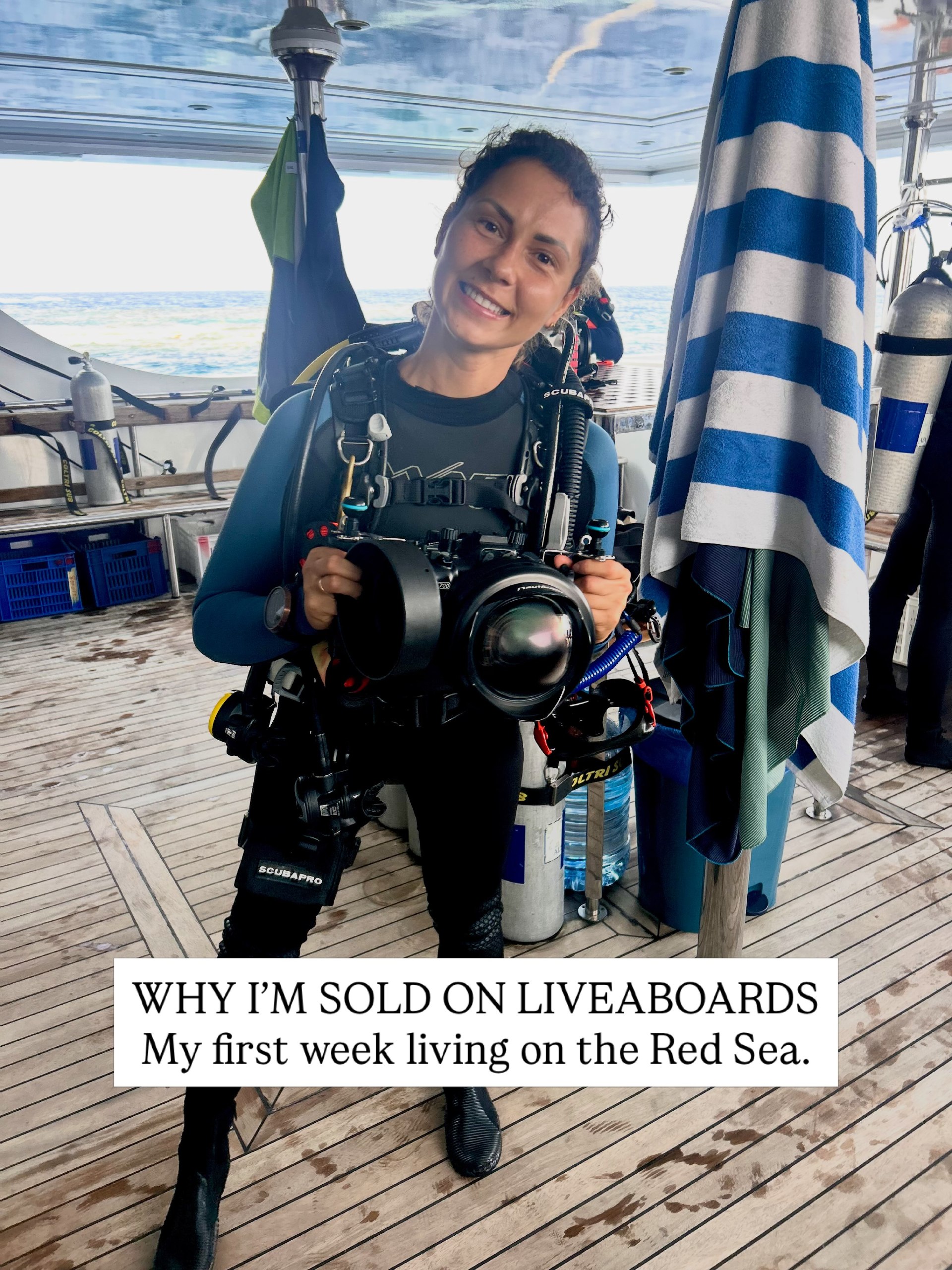
Diver in full equipment holding an underwater camera on the deck of a Red Sea liveaboard
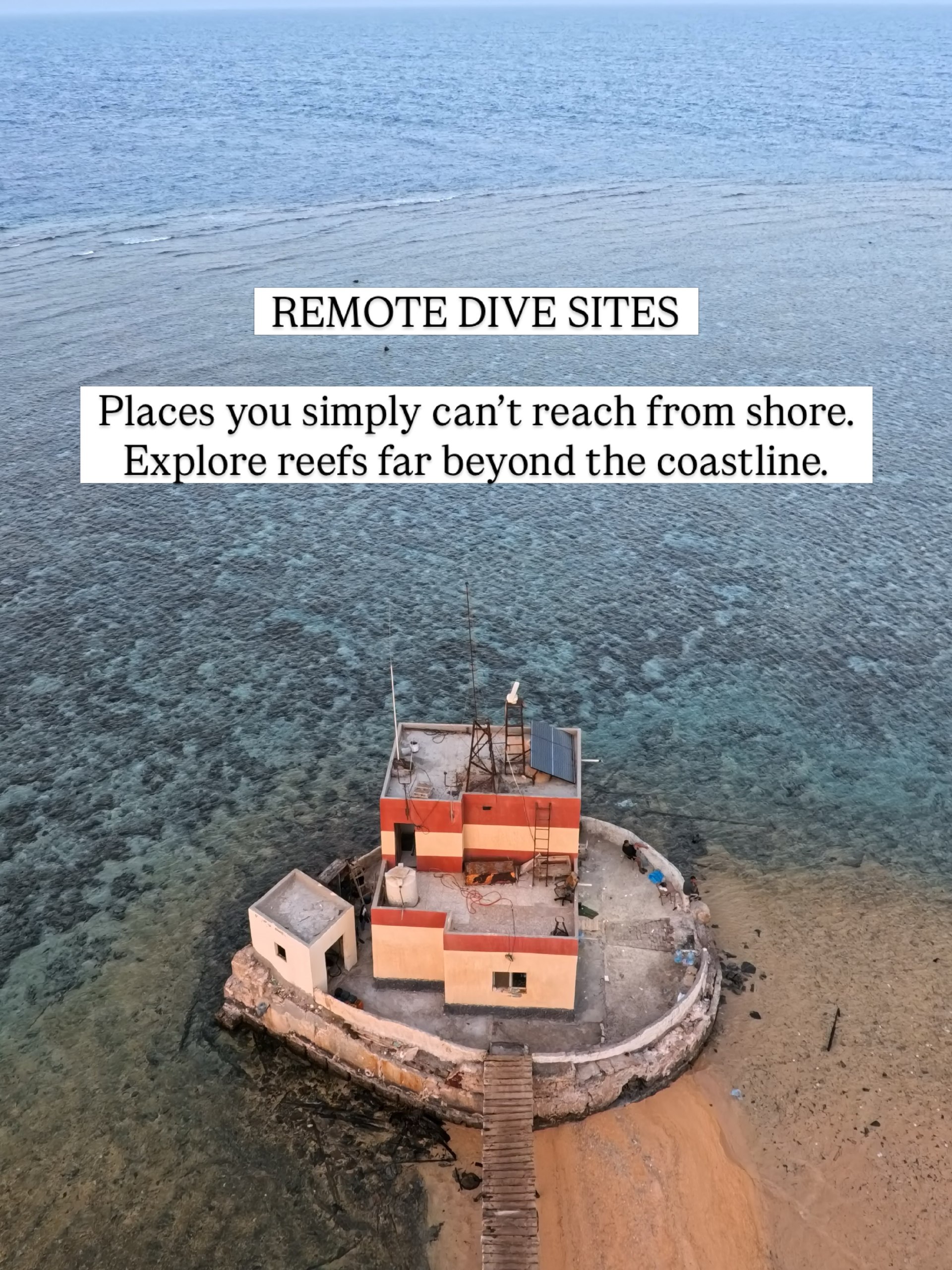
Aerial view of a small reef station surrounded by shallow turquoise water in the Red Sea
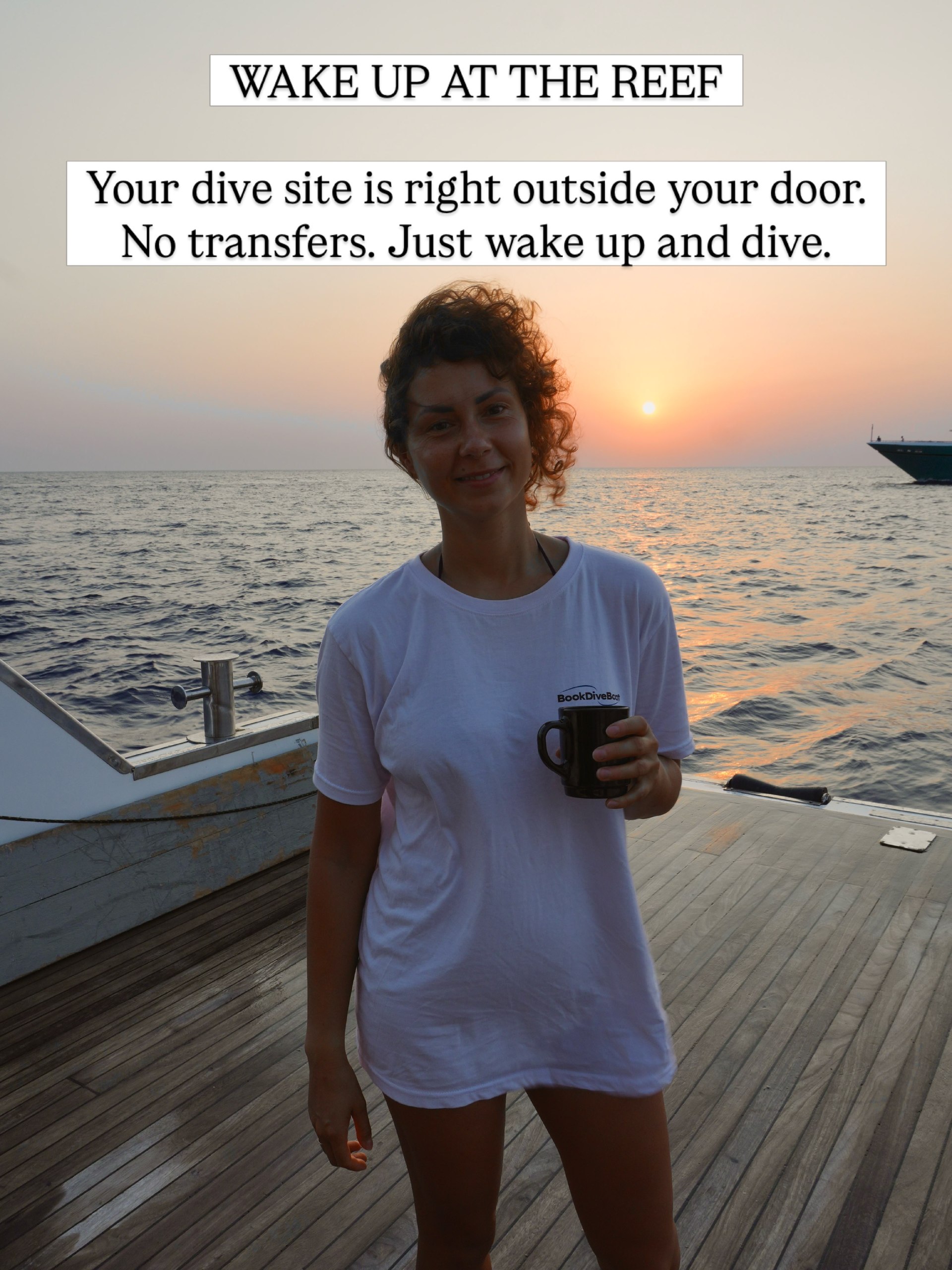
Diver holding a coffee mug on deck at sunrise with another liveaboard on the horizon
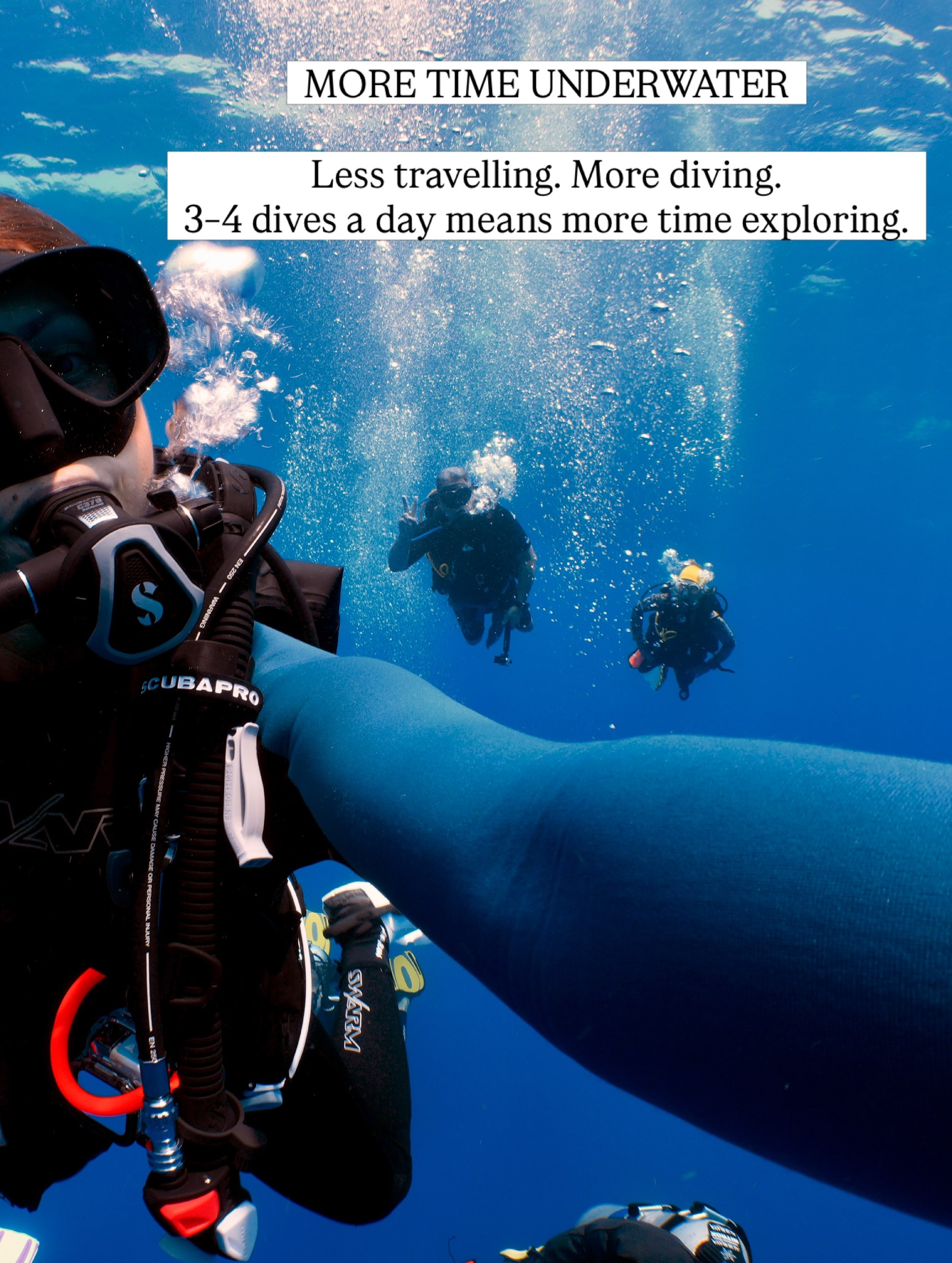
Divers descending together in blue water with sunlight above them
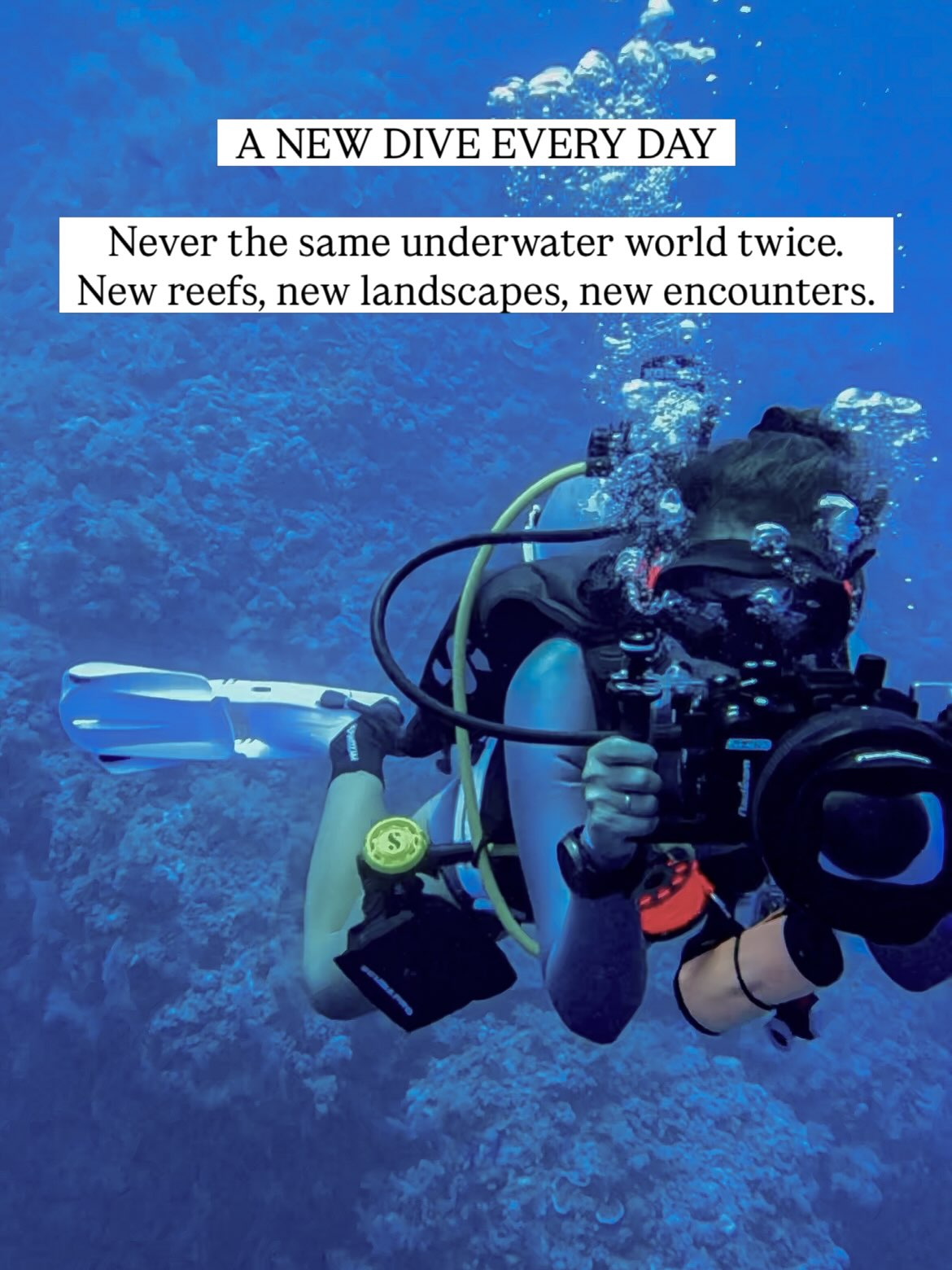
Diver with an underwater camera rig swimming along a Red Sea reef
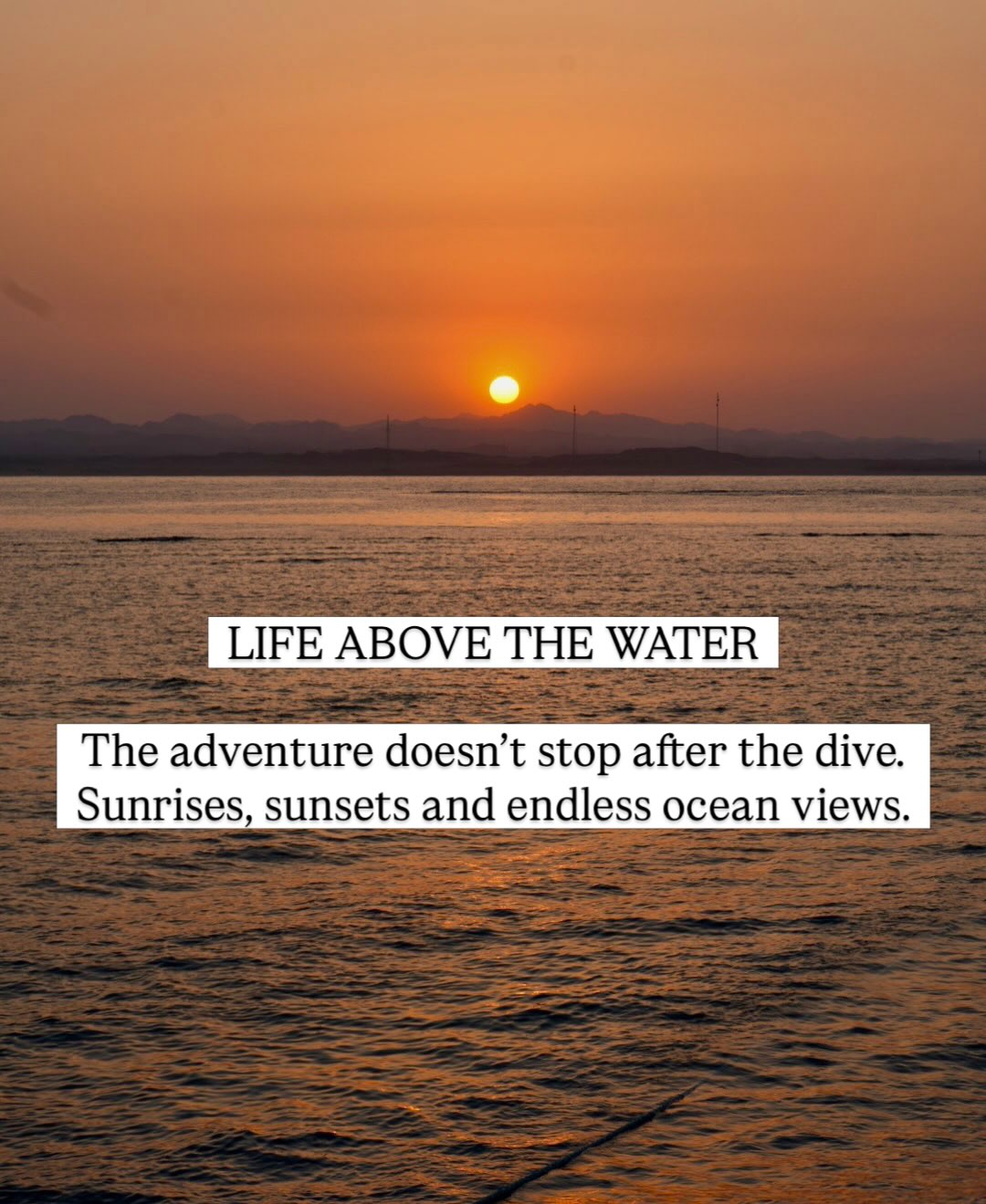
Sunset over mountains and calm water on the Egyptian Red Sea coast
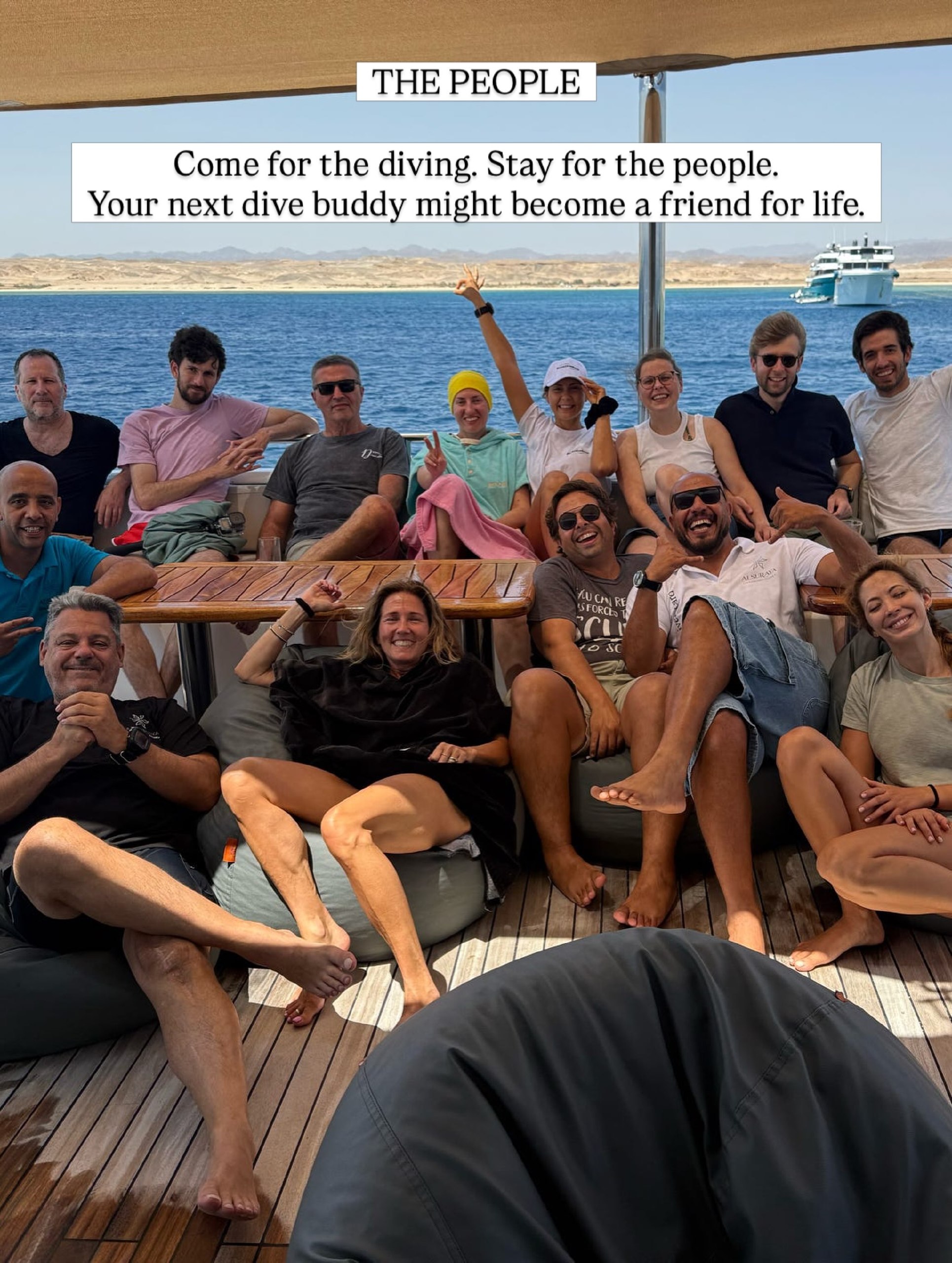
Group of divers relaxing together on the shaded deck of a liveaboard
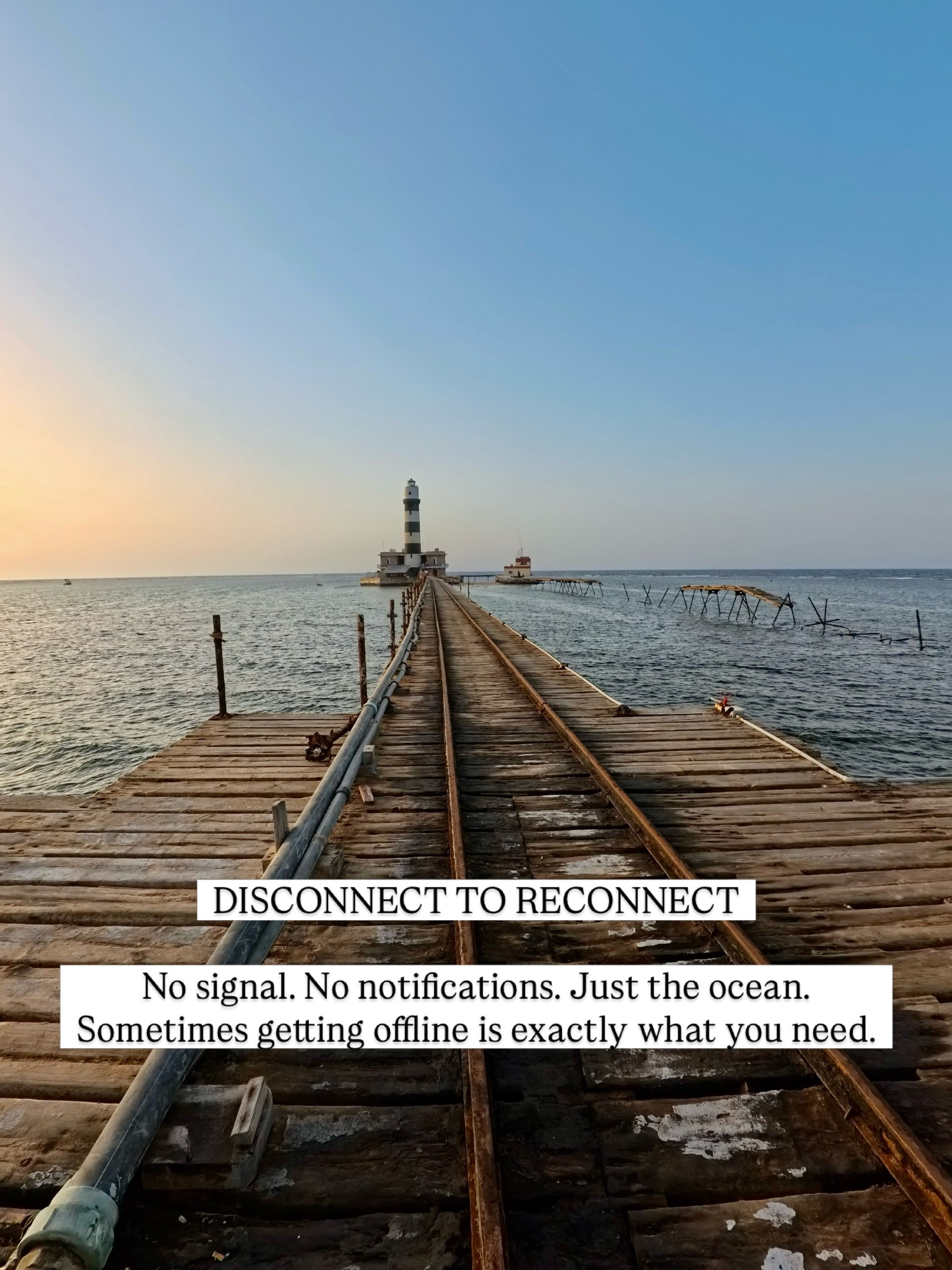
Wooden jetty leading to the Daedalus Reef lighthouse at first light
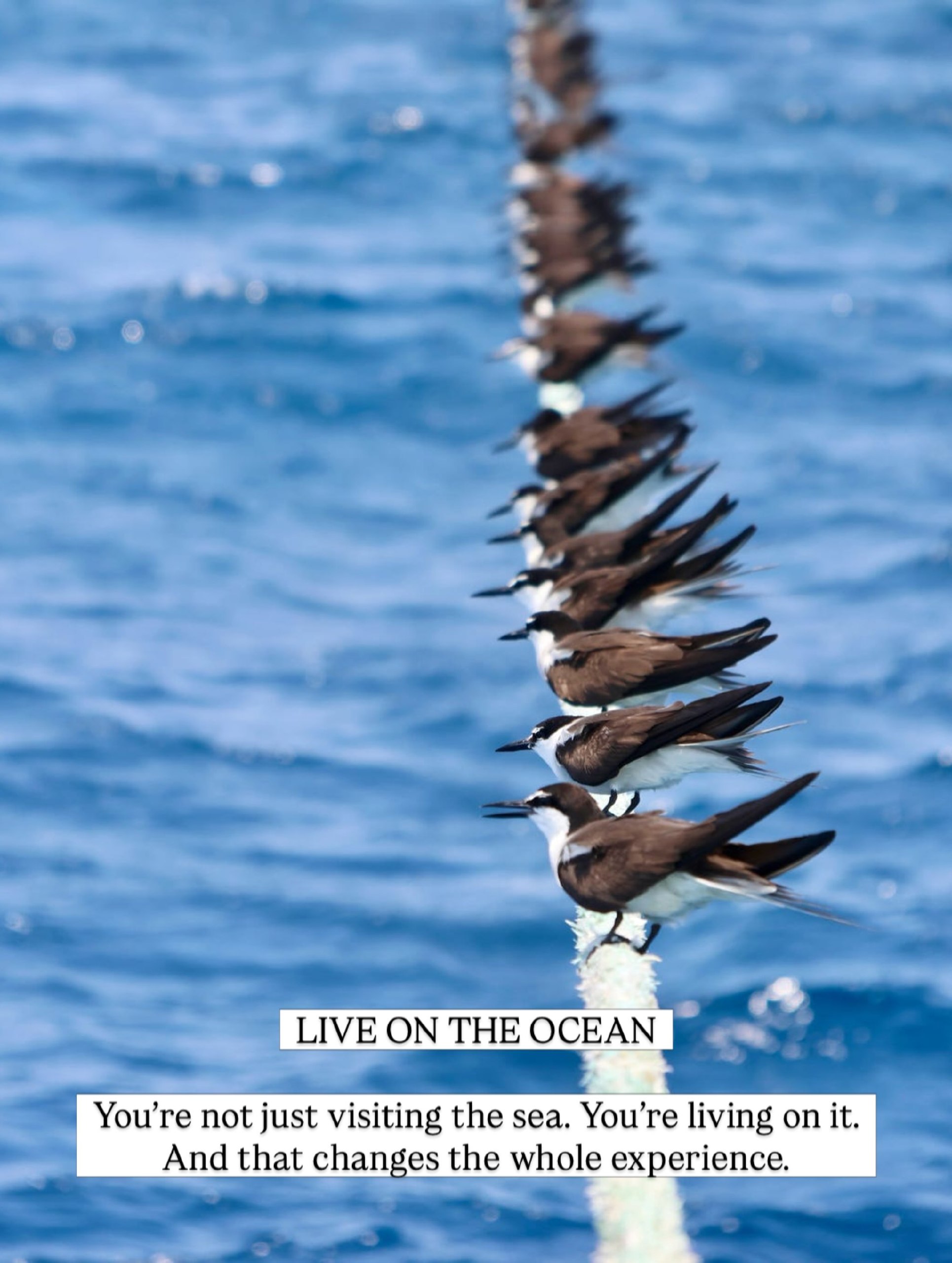
Seabirds resting in a line on a mooring rope above deep blue water

Photographs and words: @malgosja.zmi

On board

Short pieces, filmed at sea

Divers from around the world, answering the questions they had before their own first trip.

Fine, I’ll cook โ€” underwater

@lumieresouslamer

Rolling in at Abu Dabbab

@malgosja.zmi

Gearing up on the back deck

@scubadaan

Why book through BookDiveBoat

BookDiveBoat quality marks

Online reservation agency for liveaboards and dive resorts.

APST
Your payment is protected
IM025230002
Licensed travel agency
Verified operators
We work only with trusted partners
24/7
We are here to help

Thinking about your first one?

Tell us your level and your dates. We will say which boat fits and which ones to leave until later.

Or email: office@bookdiveboat.com

Plan your next dive adventure

Need a trip for you, your team, family, or crew? Letโ€™s build it together

Talk to a real trip advisor
Contact Us

We are here
to help 24/7

WhatsApp