Diving Solo on an Egypt Liveaboard: A First-Timer’s Week in the Red Sea
Part of our New Wave series — trip reports from real divers.
My name is Zaina Fadel. I’m a scuba diving instructor, based in Qatar, where I also train divers. I’ve traveled for diving before, but this was my first liveaboard — eight days, from 1 to 8 August 2026, living on a boat instead of diving from shore and going home at night.
Life on board
Living on the Red Sea, Solo
What made this trip different for me wasn’t just the diving. It was the first time I actually lived on a boat in the middle of the sea. For several days, the boat became home — wake up surrounded by the Red Sea, dive, come back, eat, rest, get ready to dive again. Being away from land and having my days connected entirely to the ocean felt different from any dive trip I’d done before.
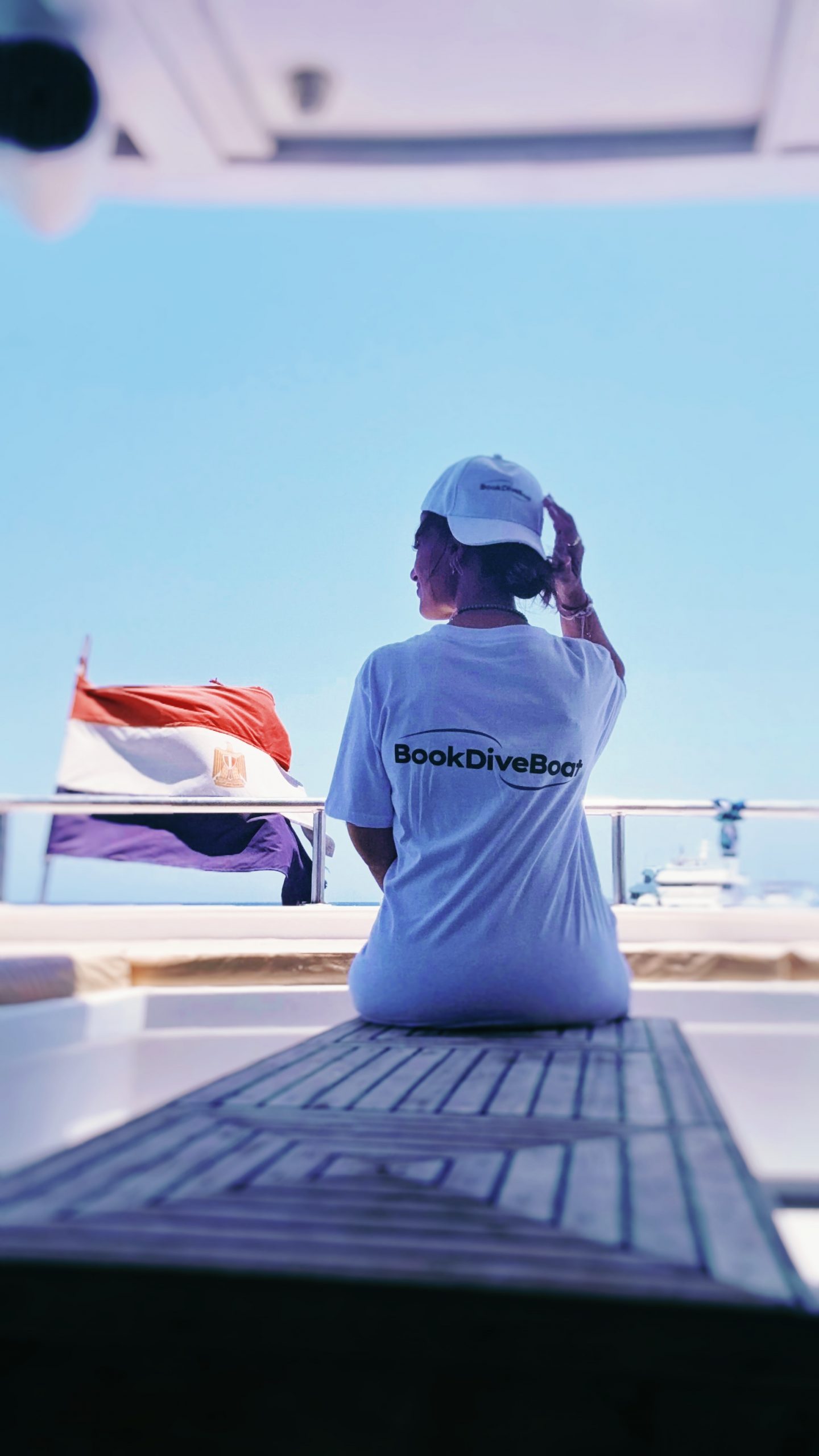
I woke up around sunrise for the first dive of the day, even though I’m not a morning person — I was always curious what we’d find underwater. Then breakfast, a nap, and the next dive, and the next. That was the whole rhythm of the week, and I loved it.
Settling in for the week — tanks racked, gear sorted, first welcome drink on deck.
For most of the trip there was no phone signal. I’d packed books expecting to be bored. I never really opened them — I was always with the other divers, talking through what we’d just seen, eating, or napping before it was time to gear up again. Not being reachable wasn’t something to get through. It was the part of the week I needed most.
Wake up, dive, eat, rest, dive again — that was the whole week, and it never got old.
Reef life
The Reef Between the Big Encounters
Every dive had its own feel — early morning, sunset, night. Even diving several times a day, it never felt like we were repeating the same dive, because there was always something different waiting on the reef itself: a moray tucked into a crevice, a stingray settled on the sand, coral thick with the usual reef traffic.
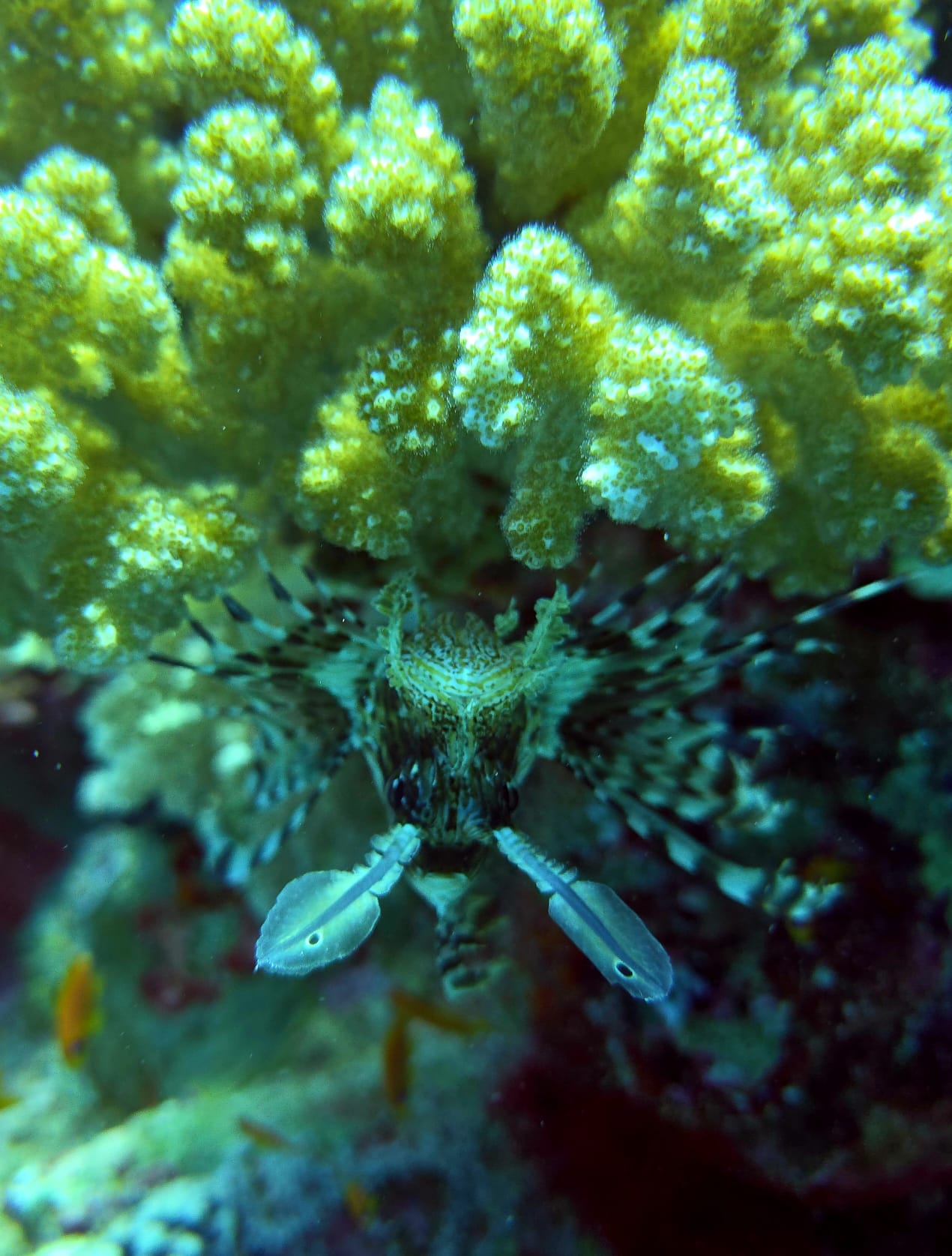
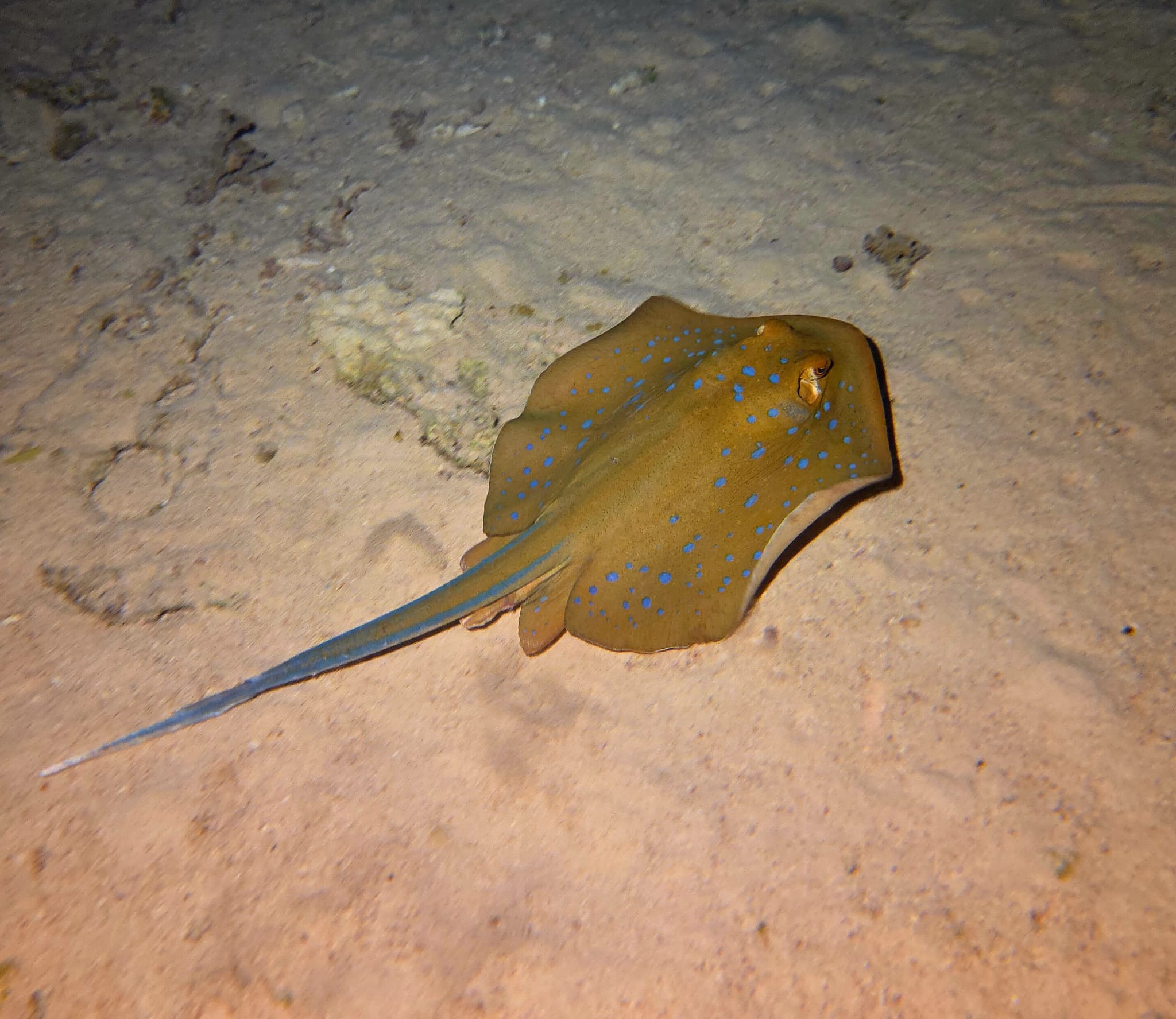
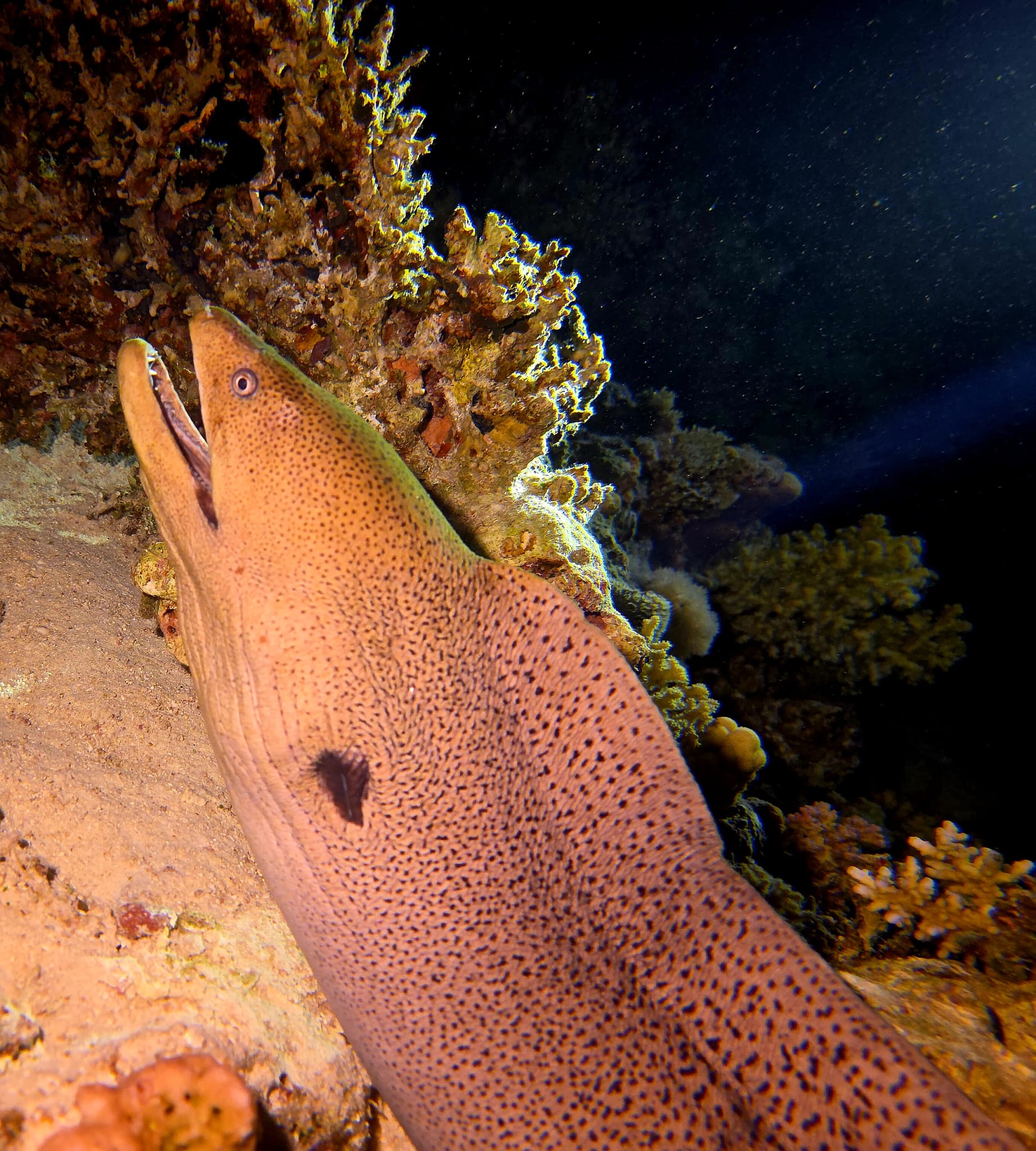
Night dives added a different mood to the week — the reef looks nothing like it does at midday, and that’s where the moray and the stingray showed up. Diving at night, at sunset, and early in the morning all had their own character, which is part of what a liveaboard gives you that a single day boat can’t: the chance to be in the water at every hour, not just the convenient ones.
The highlight
The Hammerheads — and the Dive I Forgot My Camera
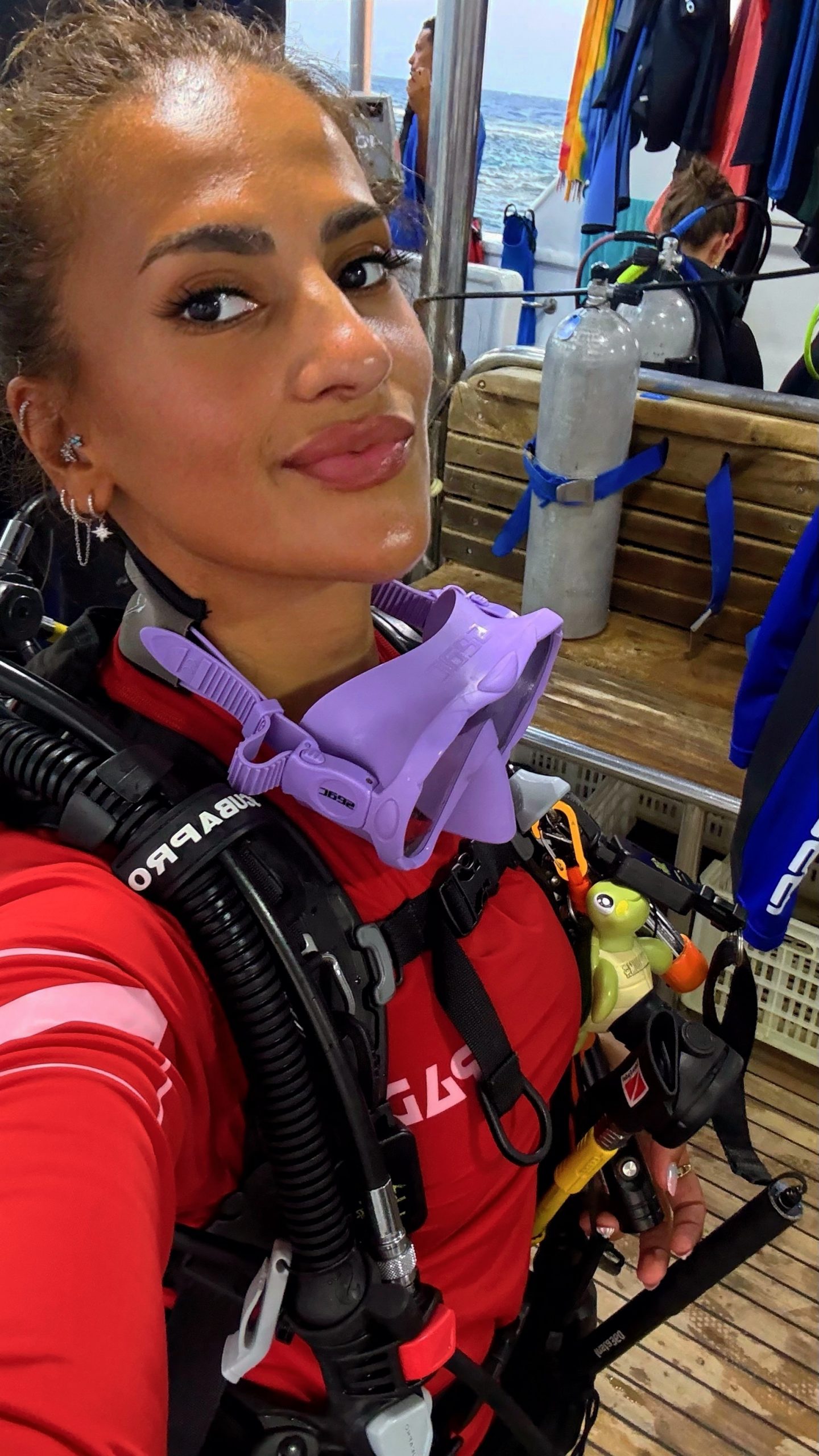
Gearing up and entering the water — the routine before every dive of the week.
Seeing a hammerhead shark was already on my list before this trip, and it’s the reason I chose the Red Sea for my first liveaboard. Our guides briefed us before every dive on what we might encounter and how to behave around different species — including the chance of oceanic whitetip or thresher sharks, though we didn’t get those encounters on this trip. Knowing the guides understood the area made me feel more confident going into every dive.
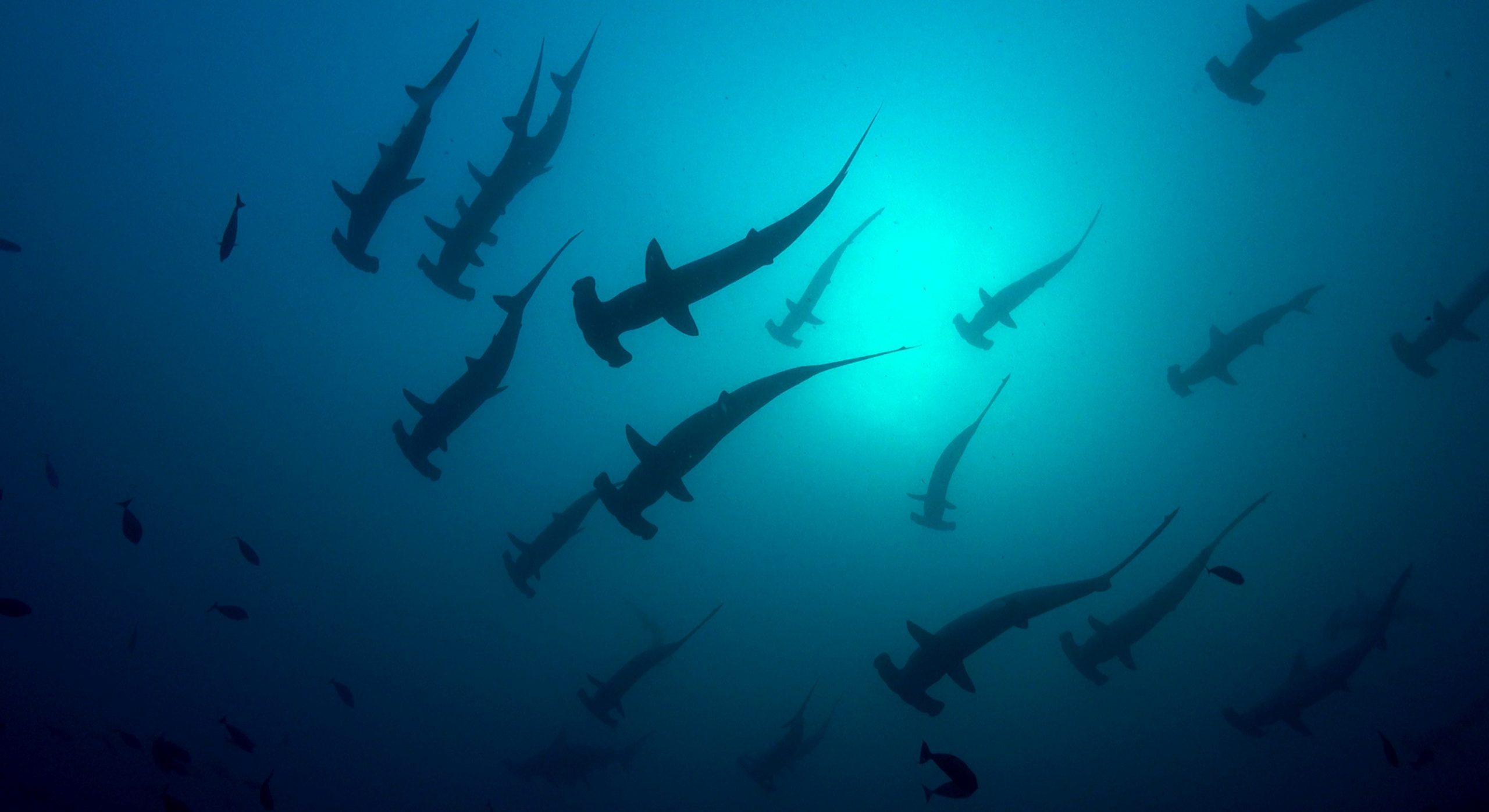
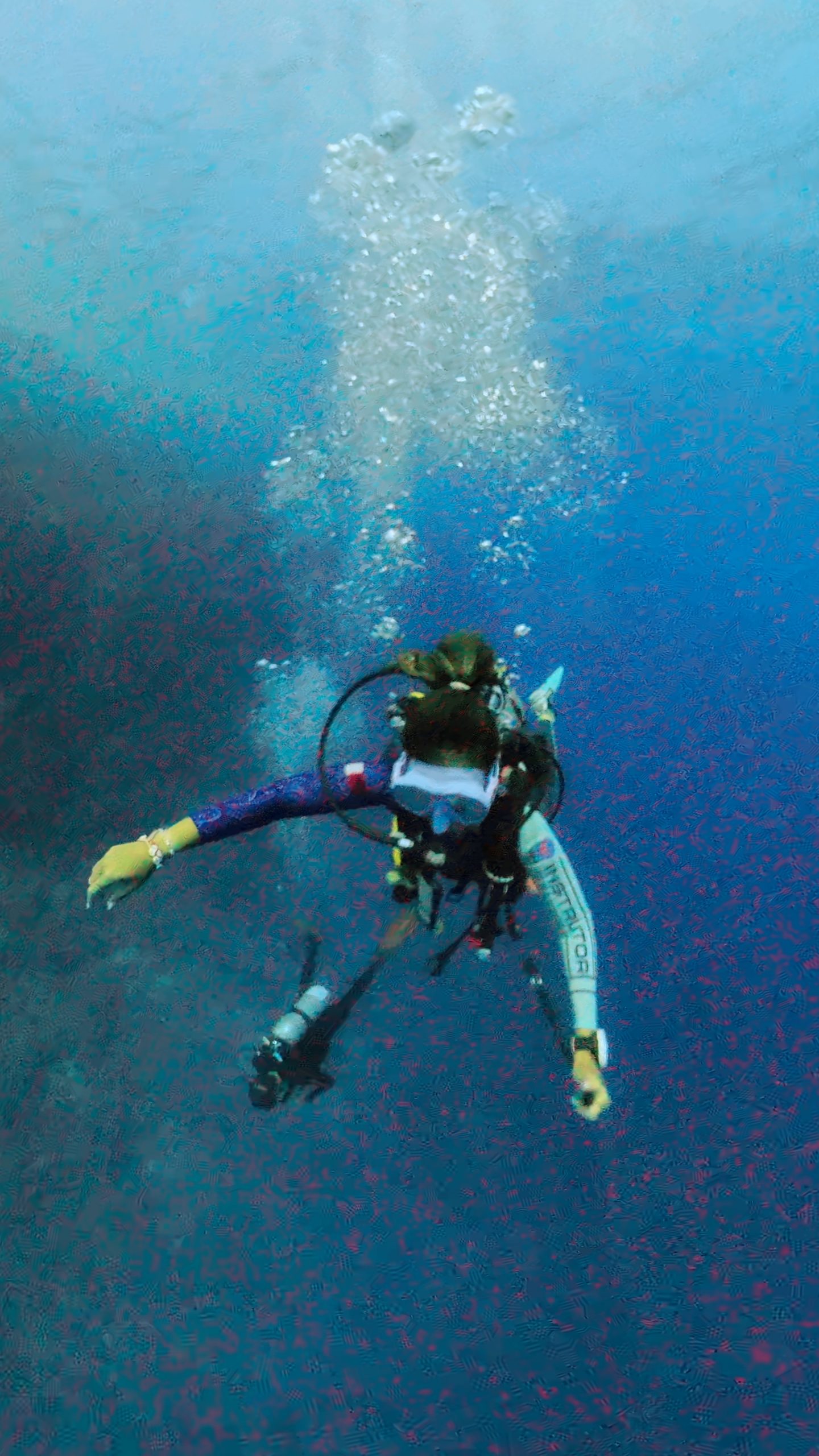
I also added Nitrox to my booking, since we were diving several times a day. At certain depths, Nitrox gives a longer no-decompression limit than diving on air — I benefited from that on some of the deeper dives, especially when we were looking for hammerheads. I didn’t want to have to go up before I’d had enough time with them.
The best hammerhead encounter of the whole trip happened on the one dive I forgot my camera. A group of them didn’t just pass by — they stayed for a while, circling around us. I was thrilled and annoyed with myself in equal measure. After that dive, everyone on board kept telling me to forget my camera again, since that was apparently when the real encounters happened.
The mood on deck after a good dive.
I never forgot my camera again after that. I still came home with footage from the rest of the trip — other hammerhead passes, whitetip sharks, octopuses, triggerfish, and a manta ray gliding low over the reef. If you want to see what a Red Sea liveaboard week built specifically around shark encounters looks like, our Daedalus Reef hammerhead trip report covers a different route with its own hammerhead and manta sightings.
Red Sea shark season runs roughly June to October.
Check available dates or reach out — we answer quickly.
Or email: office@bookdiveboat.com
Why BookDiveBoat
Why I Did This One Solo, With BookDiveBoat
As a female solo traveler, I usually think hard before choosing a destination. For this trip I was matched onto the JP Marine, and I was happy with the choice — traveling alone never felt like a burden once I was on board. It was the opposite. I felt like part of one big family of divers, all living in the same place, diving together, eating together, sharing the same days built around the same thing we all loved.
The crew on the JP Marine helping with gear between dives.
For a solo diver, that kind of matchmaking matters more than it does for a group trip — the right boat and the right group make the difference between a week that feels isolating and one that doesn’t. If you’re weighing up whether to travel alone, our going solo on a liveaboard guide goes into the logistics in more detail.
Zaina sailed on the JP Marine
See the boat’s cabins, route and dates before you book your own week.
Want your first liveaboard to go this well?
Tell us your level and dates, solo or not — we’ll match the right boat and group.
Or email: office@bookdiveboat.com
Good to know
Before You Book a Solo Liveaboard Week
🎓 Experience
Routes with a real chance of pelagic sharks typically ask for Advanced Open Water and a solid log book. Confirm the specific requirement for your dates when you book.
📅 Season
Red Sea shark season runs roughly June to October, which is when hammerhead sightings become more reliable.
🧭 Going solo
Solo divers get their own cabin and join the boat’s existing group and guide-led briefings — you don’t need to arrive with a buddy already arranged.
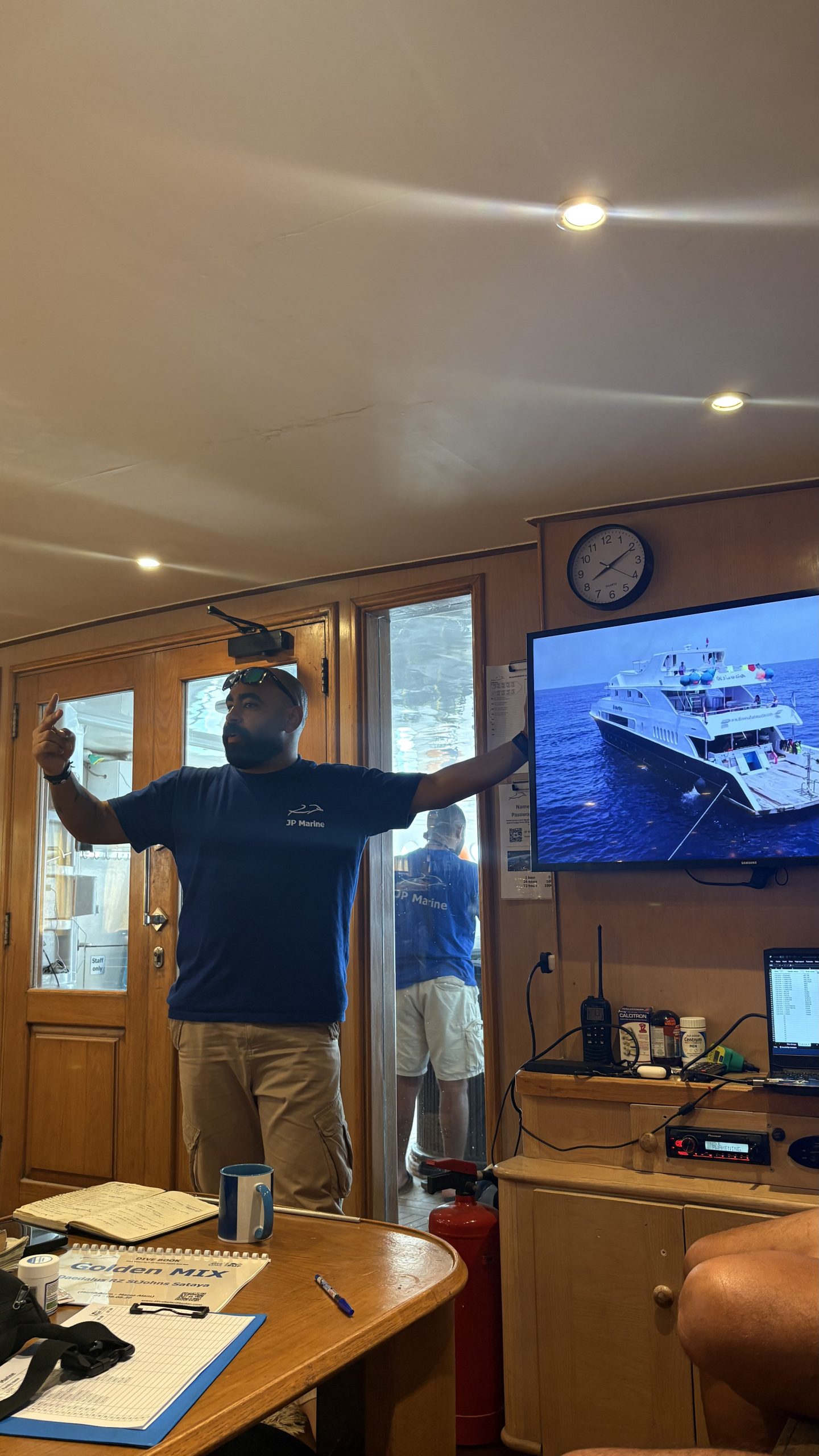
Briefings before each dive covered local conditions and whatever had been showing up that week — the possibility of oceanic whitetip and thresher sharks came up alongside the usual hammerhead talk.
Nitrox was available to add to the booking, and worth it for anyone doing several dives a day at depth. If this is your first liveaboard rather than your first solo trip, our Egypt liveaboard for beginners guide covers what to expect on a more beginner-friendly route.
Ready to plan your own week on the Red Sea?
Check available dates or reach out — we answer quickly.
Or email: office@bookdiveboat.com
The answers
Questions about diving a Red Sea liveaboard solo
Is a liveaboard a good choice for solo divers?
Do you need to bring your own dive buddy on a liveaboard?
What certification do you need for a Red Sea liveaboard?
Is Nitrox worth it on a liveaboard trip?
When is hammerhead shark season in the Red Sea?
What’s it like losing phone signal for a week?
BookDiveBoat quality marks
We earn commission when you book. If this route isn’t right for your level or dates, we’ll tell you.
Keep reading
More on Egypt liveaboards
Plan your own Egypt liveaboard week
Solo or with friends. No card needed. Reply under 1 hour.
Free to chat · No card needed · Reply under 1hr · APST financial guarantee
Plan your next dive adventure
Need a trip for you, your team, family, or crew? Let’s build it together