Liveaboard seasickness — what actually works

LIVEABOARD DIVING · PRACTICAL GUIDE

Liveaboard Seasickness — What Actually Works

Motion sickness ends most first liveaboards early — here’s what actually reduces it.

50–70%
first-timers feel queasy
Day 2
symptoms usually fade
4 hrs
patch lead time
3
remedy types that work
0
prescription needed for most

Scopolamine patches start working 4 hours before you need them.

Check available dates or reach out — we answer quickly.

Or email: office@bookdiveboat.com


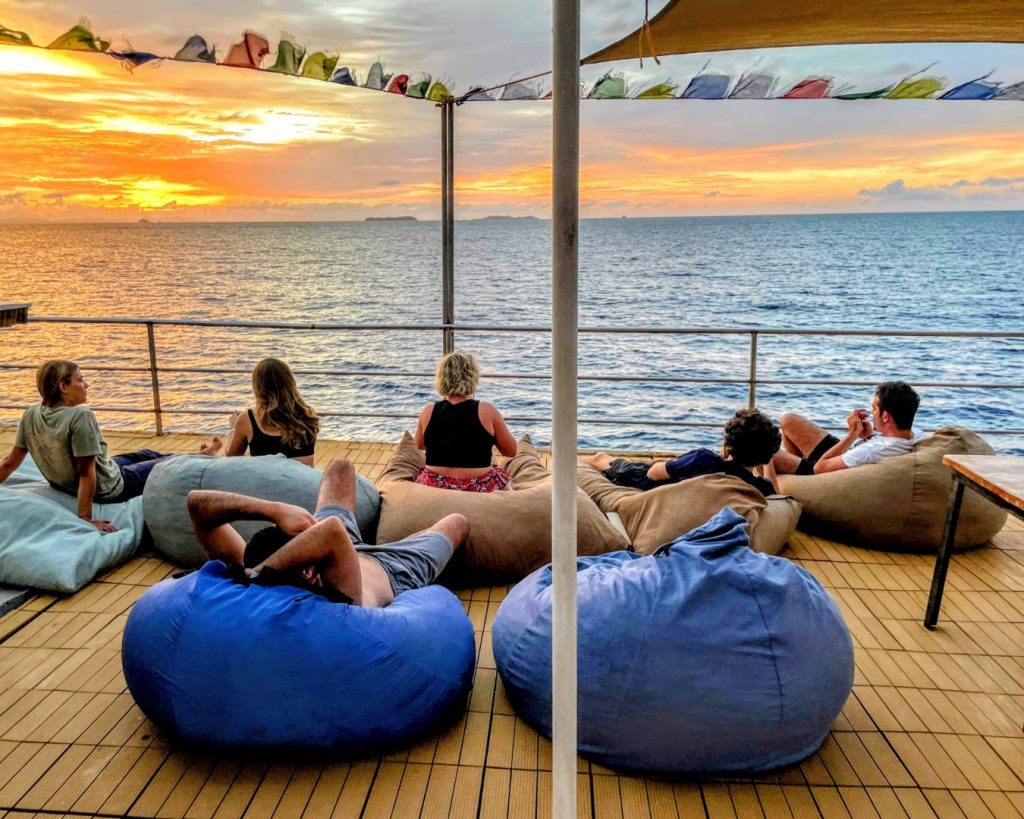
The reward once you’re past the first day at sea

THE SCIENCE

Why it happens — and what works

Your inner ear and eyes disagree about motion on open water, and that mismatch is what triggers nausea.

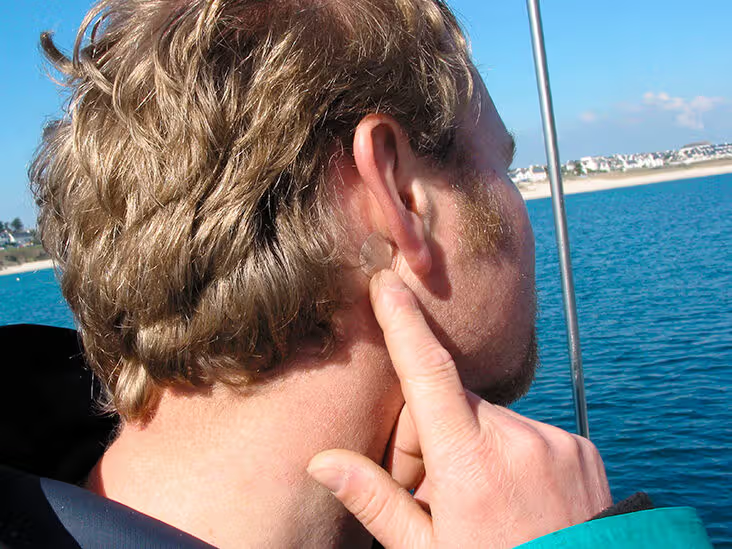
Scopolamine transdermal patch applied behind the ear
MOST EFFECTIVE
Scopolamine patch

Applied behind the ear at least 4 hours before departure, lasts up to 72 hours. Remove before diving if vision blurs at depth.

72HR PRESCRIPTION MOST EFFECTIVE
Person looking unwell from motion sickness on a boat
OVER-THE-COUNTER
Meclizine or Cinnarizine

Taken 1 hour before boarding, then every 24 hours. Cinnarizine (Stugeron) is sold over-the-counter across Europe and Asia but not in the US.

OTC 24HR DOSING DROWSINESS RISK
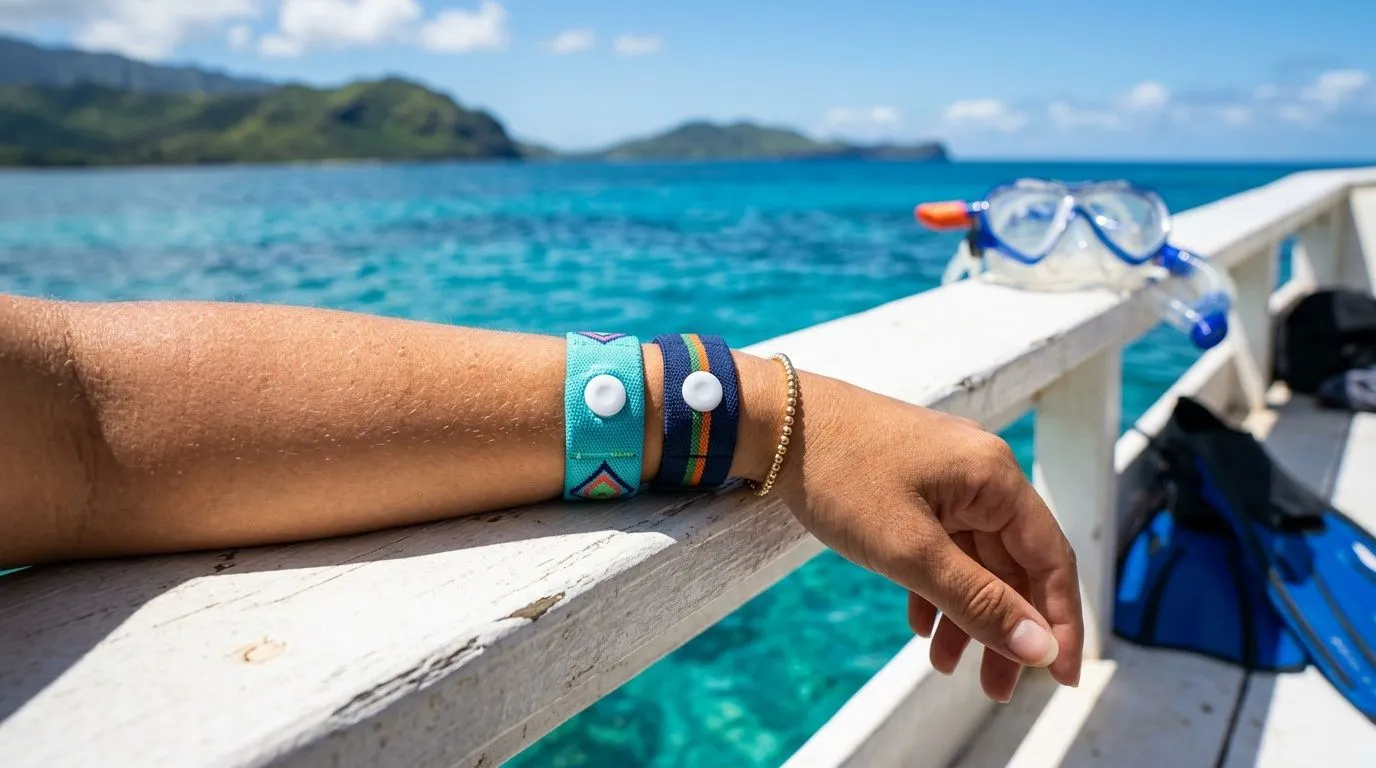
Acupressure wristband used for motion sickness
DRUG-FREE
Ginger + acupressure bands

1000mg ginger capsules plus Sea-Band wristbands work best combined, not alone. Neither matches medication for moderate-to-severe cases.

DRUG-FREE COMBINE ONLY MILD CASES
AT A GLANCE

Remedy comparison

Onset time is the detail most people get wrong — start too late and none of these work.

Remedy How it works
Scopolamine patch
Prescription
Apply at least 4 hours before departure. Lasts up to 72 hours. Side effects: dry mouth, blurred vision.
Meclizine / Cinnarizine
OTC
Take 1 hour before boarding, then every 24 hours. Side effect: drowsiness. Cinnarizine is over-the-counter in Europe and Asia, not in the US.
Ginger capsules
Drug-free
Onset 30–60 minutes, lasts 4–6 hours. Mild heartburn possible. No prescription needed.
Acupressure bands
Drug-free
Works immediately, lasts as long as worn. No side effects reported. No prescription needed.

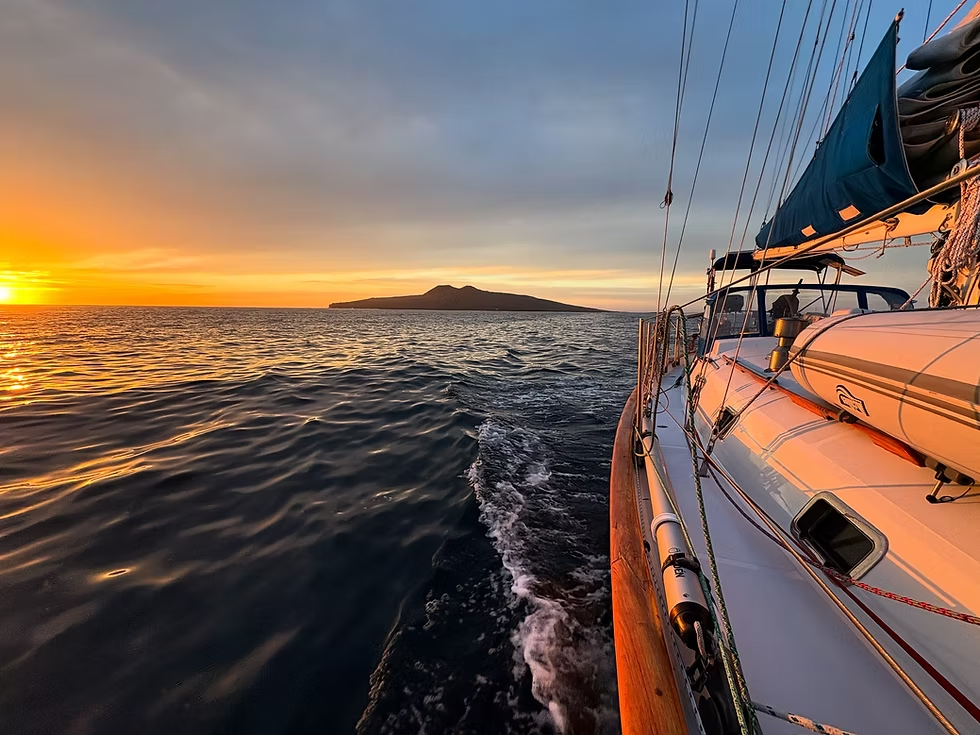
Open water crossings — the part that triggers most symptoms

OPEN WATER CROSSING · FIRST 24 HOURS
🌊 Symptoms peak in the first 24 hours, then your inner ear adapts
BOAT LAYOUT

Cabin position matters more than the remedy

Motion is strongest at the bow and weakest near the boat’s centre of gravity.

MIDSHIP, LOWER DECK
LEAST MOTION
Closest to the pivot point · smaller windows · often the priciest cabins

The centre of a boat rolls and pitches the least. Book this position first if you’re prone to seasickness.

UPPER DECK, FORWARD
MOST MOTION
Bow cabins · higher up · furthest from the pivot point

Every degree of roll is amplified here. Skip this position on your first liveaboard if you have any history of motion sickness.

STERN, NEAR ENGINE
NOISE TRADE-OFF, MODERATE MOTION
Engine and generator noise · moderate motion · usually the cheapest cabins

A reasonable second choice for motion, but engine noise and vibration are a separate complaint on overnight crossings.

Prone to seasickness and worried it’ll ruin the trip?

Not sure which boat has the calmest cabins? Just ask.

Check available dates or reach out — we answer quickly.

Or email: office@bookdiveboat.com

PRACTICAL INFO

Medication timing and practical info

Most remedies fail because they’re started too late, not because they don’t work.

Topic Detail
When to start Apply the patch or take your first dose the morning of embarkation, not once you’re already on board and queasy.
Combining remedies Ginger and acupressure bands are safe alongside patches or pills. Don’t combine two different antihistamine-based medications — check with a doctor first.
Kids and seasickness Dosing for antihistamines is weight-based for children — confirm the correct dose with a pharmacist before departure, not the adult dose halved.
Telling your dive guide Mention it at check-in. Guides adjust surface interval spots and can move you to a calmer position on the dive deck.
Diving on medication Scopolamine and antihistamines are widely used by divers, but test any new medication on land first — drowsiness underwater is a real risk.

Pack list, cert check, cabin pick — sorted before you board.

Check available dates or reach out — we answer quickly.

Or email: office@bookdiveboat.com


Life on board once the first day is behind you

Why book through BDB

BDB quality marks

Online reservation agency for liveaboards and dive resorts. Paris, France.

🛡 APST — Your payment is protected
Paris & Besançon · IM025230002 · SIRET 94829922700017
✓ BDB-Verified partner ✓ Visited by BDB team ⭐ Top-rated for solo divers 🎓 Advanced divers 👥 Groups & B2B welcome 🛡 APST Financial Guarantee 💶 No hidden fees — full cost shown ✓ Reply under 1hr

We earn commission when you book. If this destination isn’t right for your level or dates, we’ll tell you.

FAQ

Questions we get every week

Does everyone get seasick on a liveaboard?
No. Roughly half of first-time liveaboard divers feel some queasiness, usually during the first open-water crossing. Experienced sailors and people who don’t get carsick often feel nothing at all. Symptoms typically fade by the second day as the inner ear adjusts to constant motion.
What’s the single best remedy?
For most people, the scopolamine patch is the most reliable single option — it requires no repeat dosing and lasts up to 72 hours. It needs a prescription in most countries and must go on at least 4 hours before departure. If you can’t get a prescription in time, an over-the-counter antihistamine like meclizine or cinnarizine is the next best option.
Can I take seasickness medication and still dive safely?
Yes, scopolamine and standard antihistamines are widely used by liveaboard divers. The one rule: test any new medication on land first. Drowsiness or blurred vision underwater is a separate risk from seasickness itself, and you want to know how your body reacts before you’re at depth.
Which cabin should I book if I’m prone to it?
Midship, lower-deck cabins sit closest to the boat’s centre of gravity and experience the least roll and pitch. Upper-deck forward cabins are the worst choice for motion sickness — they’re furthest from the pivot point and every degree of movement is amplified. Ask your booking agent which cabins qualify as midship before you pay any single-cabin premium.
Do ginger and acupressure bands actually work?
They help with mild symptoms, especially combined with each other, but neither matches medication for moderate-to-severe seasickness. They’re a reasonable first line if you’d rather avoid drugs, and there’s no reason not to combine them with a patch or pills for extra coverage.
How long until I get my sea legs?
Most divers adapt within 24 to 48 hours of continuous time at sea. The adaptation resets if you return to land for more than a day or two, which is why the first open-water crossing of any trip is usually the roughest.
Ready to book?

Seasickness sorted — tell us your dates and we’ll pick the calmest cabin for you.

No card needed. Reply under 1 hour.

Free to chat · No card needed · Reply under 1hr · APST financial guarantee

Plan your next dive adventure

Need a trip for you, your team, family, or crew? Let’s build it together

Talk to a real trip advisor
Contact Us

We are here
to help 24/7

WhatsApp