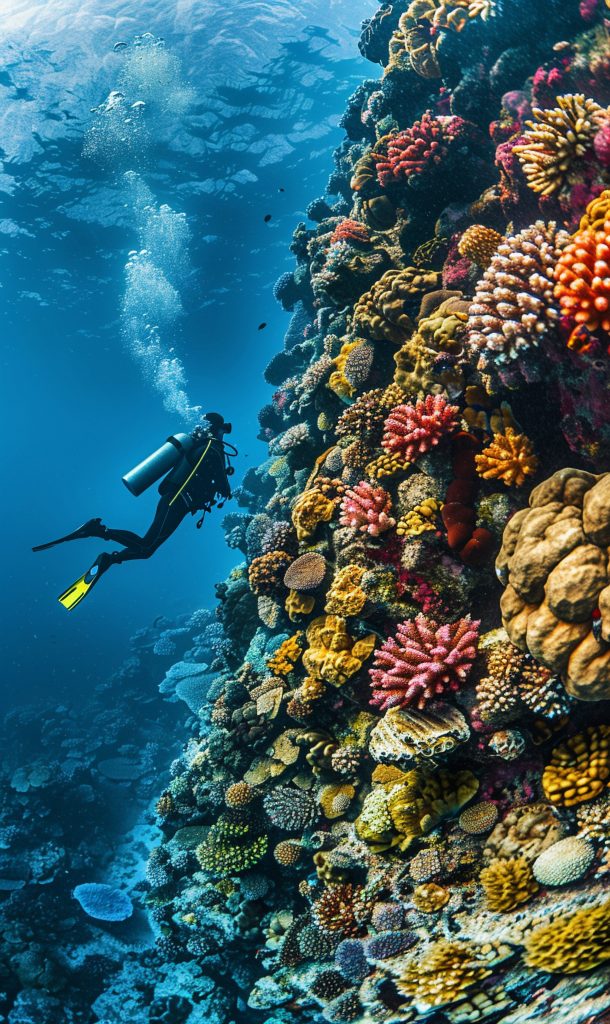
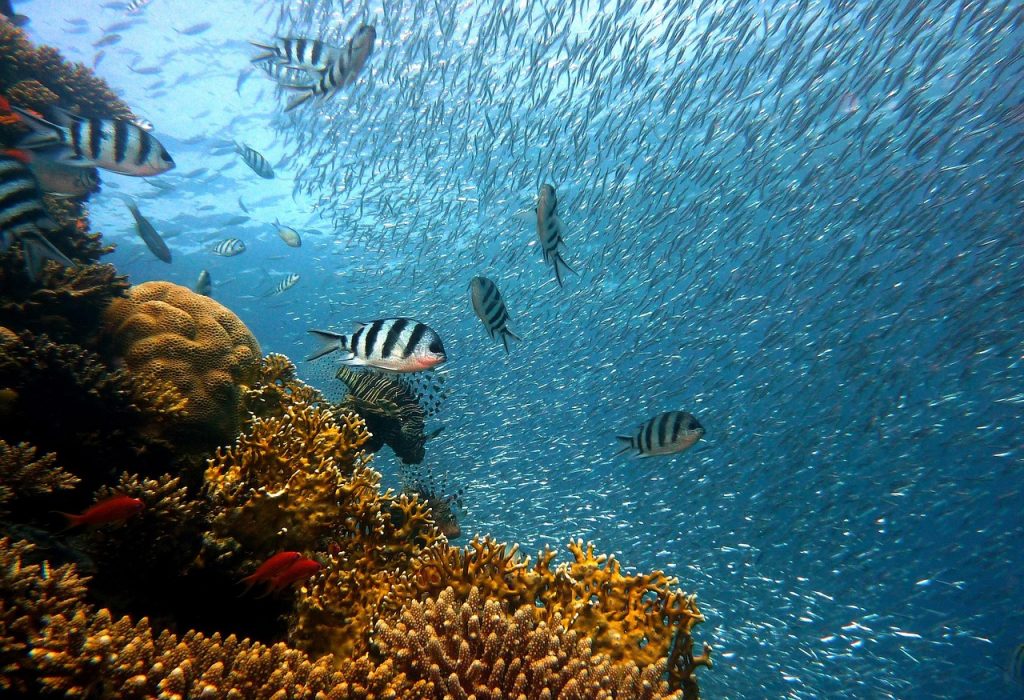
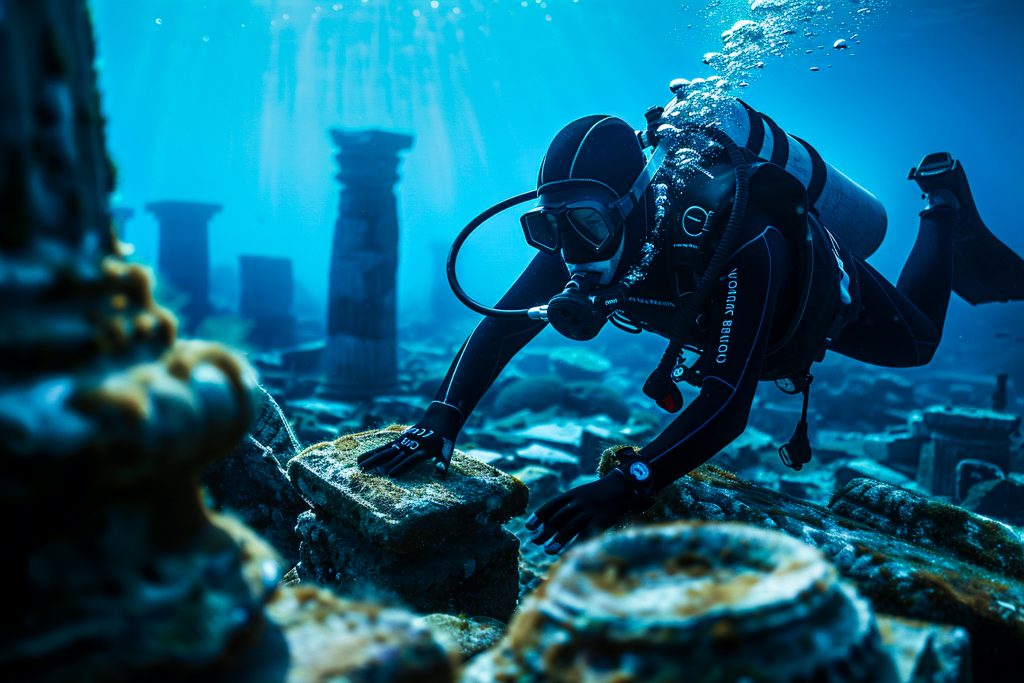
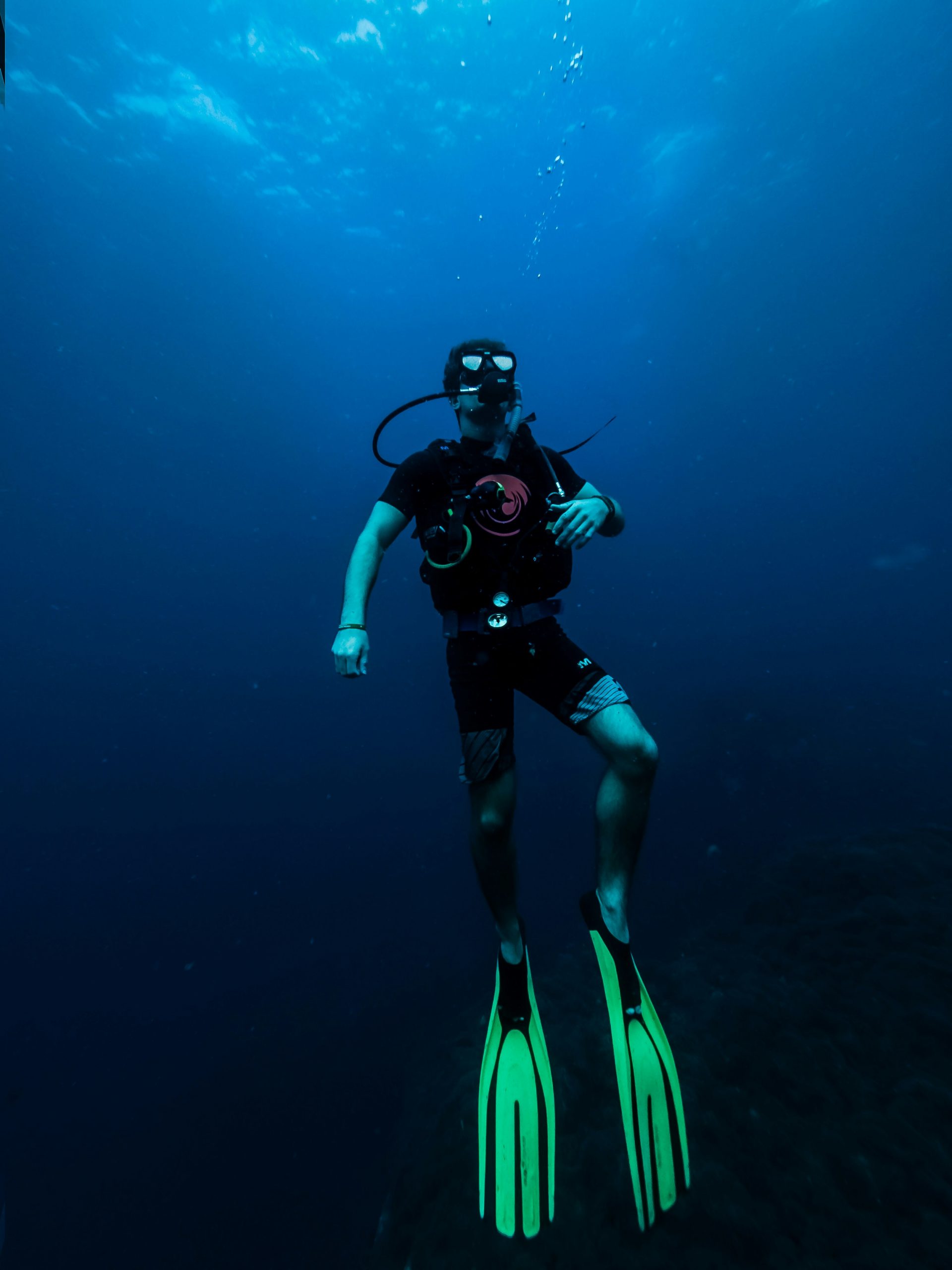
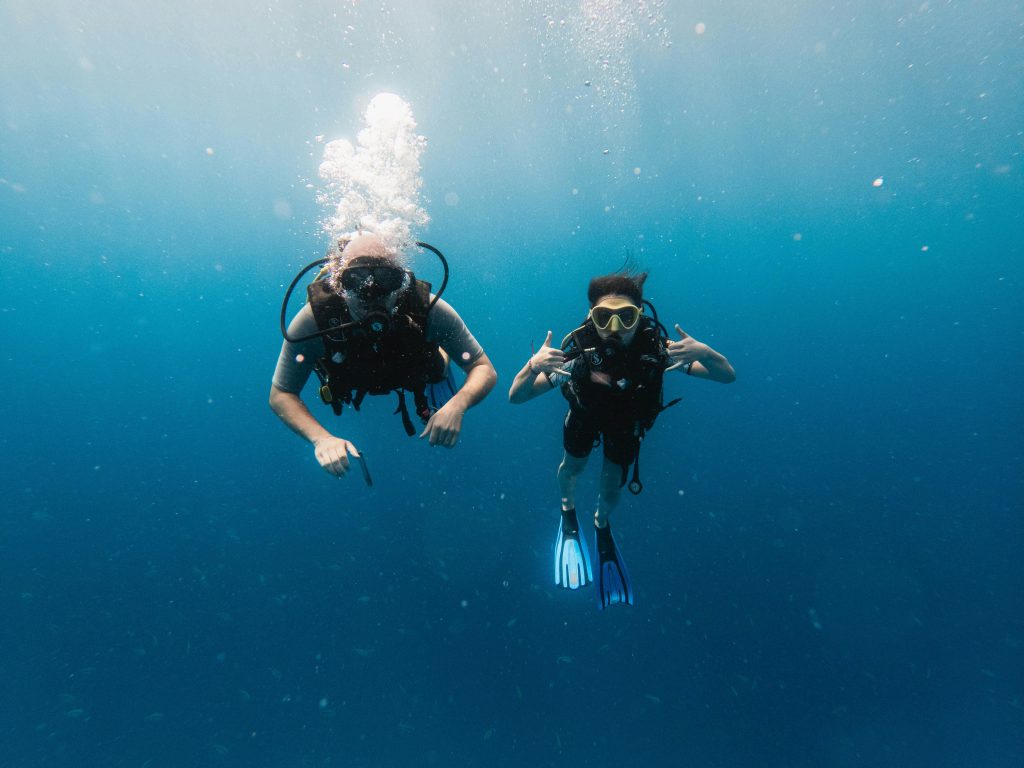
Underwater life you’ll encounter on a liveaboard — reef walls, schools, and close encounters.
Dive Gear
What to Bring vs. What You Can Rent
Some gear is always worth owning — rental versions are generic, poorly fitted, and shared.
Always Bring
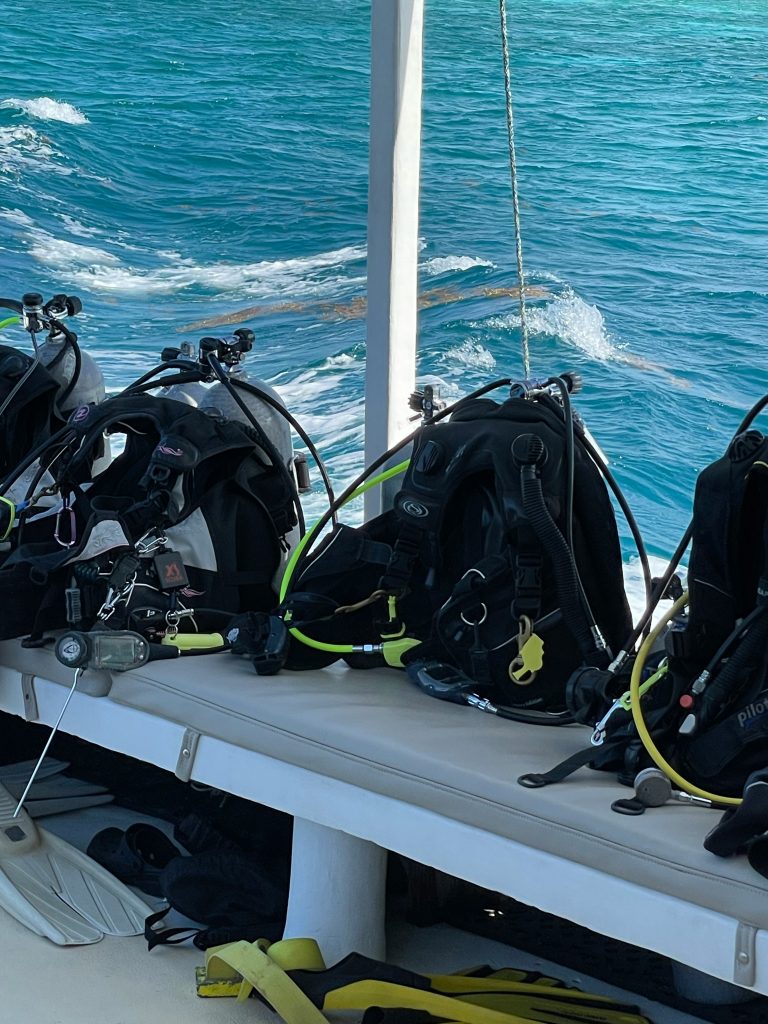
BCD & Regulator
Fit and trust matter — rental BCDs are bulky and regulator mouthpieces are shared. If you own them, bring them.
BCDRegulatorSPG
Non-Negotiable
Mask & Fins
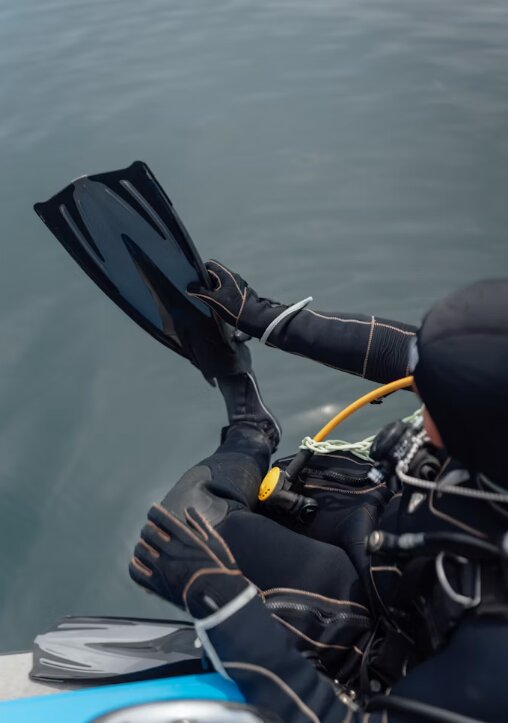
Rental masks leak and fog constantly — yours is fitted to your face. Fins are personal; rental sizes are limited and open-heel rentals come without boots.
Mask + defogFinsBooties
Your Data, Your Dive
Dive Computer
Boats provide tank and weight — they do not provide computers. Your dive log, NDL tracking and surface interval data all live on your computer.
Wrist computerSpare batteryCharging cable
Clothing & Topside
What to Wear Above Water
Cabin space is roughly the size of a large wardrobe — pack light and think in layers.
Item
Notes
Rash guard × 2 Essential
Long sleeve for sun and wetsuit chafe. Dries fast — two is enough for a 7-day trip.
Shorts × 2–3 Essential
Board shorts or lightweight travel shorts. No need for trousers unless flying to a cold airport.
T-shirts × 3 Essential
Surface interval wear — quick-dry fabric preferred. You will not dress up at dinner.
Light fleece or hoodie Essential
Night dives, early morning briefings and air-conditioned cabins all get cold. One layer is enough.
Sun hat + sunglasses Essential
Surface intervals on deck can last 60–90 min. No shade on most dive decks.
Reef-safe sunscreen Essential
Mineral-only (zinc/titanium). Many liveaboards ban chemical sunscreen — check before you pack.
Flip-flops Essential
Deck shoes, bathroom, dinghy transfers. One pair is enough.
Small dry bag Essential
10–20 L for phone, passport, and electronics during dinghy transfers. Your main bag will get wet.
Wetsuit Bring or rent
3mm for warm tropics (Maldives, Indonesia peak season), 5mm for Red Sea winter or deep dives. Rentable but bring yours if you run cold.
Dive torch Recommended
Primary for night dives, backup for cave/wreck penetration. Boats sometimes have loaners — confirm in advance.
SMB + reel Recommended
Surface marker buoy for drift dives and blue-water sites. Some boats require you bring your own.
Essential = trip doesn’t work without it · Recommended = you’ll want it · Bring or rent = personal preference
Surface intervals between dives — the view you’ll have between 3 and 4 dives a day.
Packing · Bag Limits · All Destinations
🎒 Most liveaboards cap bags at 10–15 kg — soft duffels only, hard-shell cases stay at the airport hotel.
Meds, Docs & Electronics
The Kit Most People Forget
Once you’re offshore, there is no pharmacy and no ATM — these are the categories divers consistently under-pack.
Seasickness Medication
Pack Before You Leave
Take before departure · Day 1 is usually the roughest
Scopolamine patches (behind the ear, 3-day duration) or cinnarizine tablets. Dramamine works but causes drowsiness. Take before you board — not after you feel it.
Ear Care Kit
Daily Use
3–4 dives/day · constant water exposure
Isopropyl alcohol + white vinegar drops (50/50) after each dive day prevents swimmer’s ear. Bring 1 bottle — available at dive shops but not on boats.
Travel Documents
Don’t Forget
Originals + digital backup · keep waterproof
Passport, dive certification card (physical or digital — PADI/SSI apps work), dive log, and travel insurance with dive coverage. Some countries require a paper cert for liveaboard check-in.
Electronics
Charging Planning Required
Limited sockets · shared charging areas on most boats
Multi-port USB charger (1 socket = 4 devices), universal plug adapter, and a power bank for deck use. Camera divers: bring enough memory cards and batteries for 3–4 dives per day — offloading to a laptop between dives is the standard workflow.
Personal Medical Kit
Always Pack
Boats carry basic first aid — not your prescriptions
Antihistamines (jellyfish, coral), ibuprofen, antidiarrheal tablets, blister plasters, and any personal prescription medication for the full trip plus 2 extra days. Boats have oxygen kits and first aid — they do not stock allergy meds.
Not sure if your destination needs a 3mm or 5mm wetsuit? Ask us before you pack.
Every boat is slightly different — this table covers what applies across most liveaboards.
Topic
Detail
Bag type
Soft duffel bags only. Hard-shell suitcases cannot be stored on most liveaboards. Leave your suitcase at an airport hotel or luggage storage.
Weight limit
10–15 kg for personal luggage on most liveaboards. Dive gear is usually carried separately and not counted — confirm with your specific boat.
Tanks & weights
Always provided. 12 L aluminium tanks are standard; steel 15 L available on some boats. Weight belts and integrated weights provided — never pack lead.
Wetsuit thickness
3mm: Maldives, Indonesia (Apr–Oct), Mexico (summer). 5mm: Egypt (Nov–Mar), Indonesia (Nov–Mar), Galápagos year-round. 7mm: Galápagos deep sites and night dives.
Nitrox
Available on most liveaboards for an extra fee (typically €50–100/week). Requires Nitrox certification. Bring your card — you will be asked.
Towels
Provided on most liveaboards. A fast-drying microfibre towel is useful for deck use between dives — smaller and quicker than the boat’s cabin towels.
Shampoo & toiletries
Basic soap provided. Bring your own shampoo, conditioner, and any skincare. Biodegradable products required on most boats — check eco policy before you pack.
Electricity
220V on most boats; 110V available on some. Sockets are shared in the salon or charging area — not always in cabins. Bring a multi-port USB charger and universal adapter.
Wi-Fi
Available on some liveaboards via satellite — slow and often restricted to messaging. Assume no reliable internet offshore and download maps, shows, and dive sites before you board.
Camera gear
Camera tables and rinse tanks available on most liveaboards. Bring enough memory cards for 3–4 dives per day and a laptop for offloading. Strobe arms can take deck space — compact rigs preferred.
Plan your trip
What kind of diving trip are you planning?
Both liveaboards and resorts work for every destination — your schedule and group decide.
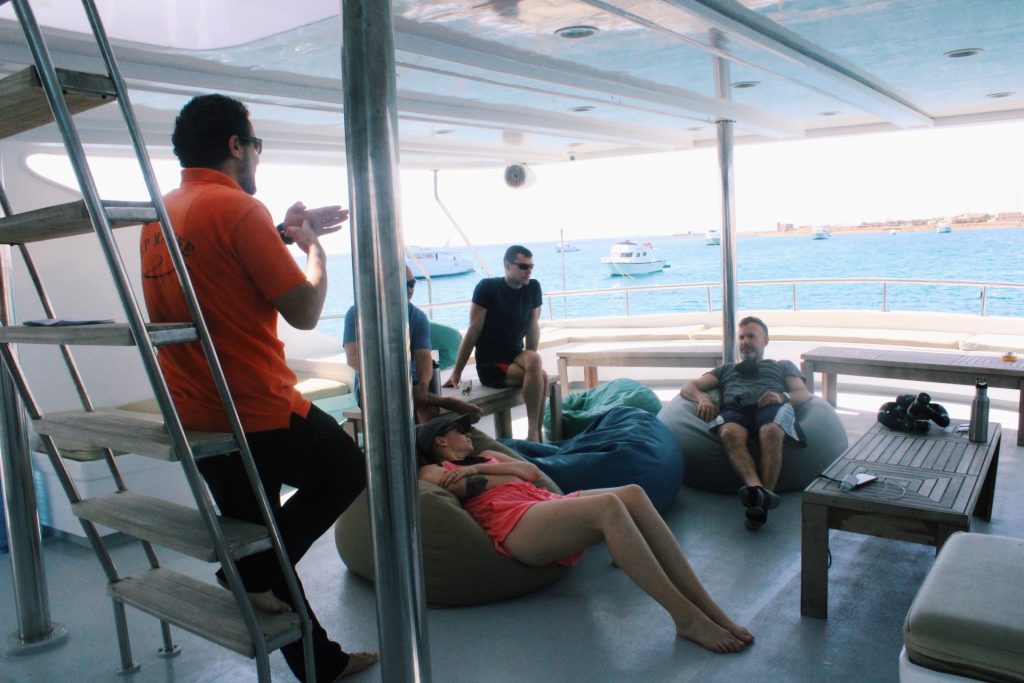
Life on board — briefings, gear rinse, and deck time between dives.
Why book through BDB
BDB quality marks
Online reservation agency for liveaboards and dive resorts. Paris, France.
🛡 APST — Your payment is protected
Paris & Besançon · IM025230002 · SIRET 94829922700017
✓ BDB-Verified partner✓ Visited by BDB team⭐ Top-rated for solo divers🎓 Advanced divers👥 Groups & B2B welcome🛡 APST Financial Guarantee💶 No hidden fees — full cost shown✓ Reply under 1hr
We earn commission when you book. If this destination isn’t right for your level or dates, we’ll tell you.
Most liveaboards allow one soft bag of 10–15 kg for personal luggage, plus your dive bag for equipment. Hard-shell suitcases cannot be stored on board — leave them at airport luggage storage or your pre-trip hotel. Some boats have stricter limits, especially smaller wooden phinisis in Indonesia. Ask before you pack: we can confirm the exact allowance for your boat.
Should I bring my own BCD and regulator or rent on the boat?
Bring them if you own them. Rental BCDs are bulky, poorly sized, and usually only available in a few sizes. Rental regulators are functional but shared — mouthpieces are washed, not replaced. If you’ve never bought a regulator, a liveaboard trip is a good reason to: you’ll be putting it in your mouth 3–4 times a day for 7 days. That said, rental gear on most liveaboards is perfectly serviceable if you’re still building your kit.
What wetsuit thickness do I need?
3mm works for most warm-water destinations: Maldives, Indonesia between April and October, and Mexico in summer. 5mm is better for Egypt between November and March, Galápagos surface waters, and Indonesia in the wet season. Galápagos deep sites and night dives warrant 7mm or a 5mm + hood combination — water at depth sits around 18–20°C year-round. If you run cold, size up. Rental wetsuits are available on most liveaboards but sizing is limited — bring your own for a better fit.
What medications should I pack for a liveaboard?
Seasickness medication is the priority — take it before you board, not after you feel sick. Scopolamine patches (behind the ear, effective for 3 days) or cinnarizine tablets work well for most divers. Beyond that: antihistamines for jellyfish stings or coral contact, ibuprofen, antidiarrheal tablets, ear drops (isopropyl alcohol + white vinegar 50/50 to prevent swimmer’s ear after diving), and any personal prescriptions. Pack enough for the full trip plus 2 extra days — there is no pharmacy offshore. Boats carry oxygen and basic first aid kits; they do not stock allergy or prescription medications.
Do liveaboards provide towels and toiletries?
Most liveaboards provide towels and basic soap. Shampoo, conditioner, and personal skincare are usually not provided — bring your own. Many boats require biodegradable products only, to protect reef ecosystems. Check your boat’s eco policy before you pack. A fast-drying microfibre towel is worth having for deck use between dives, in addition to the cabin towels provided.
Can I bring a camera, and will there be charging points?
Yes — most liveaboards have a camera table, rinse tanks, and charging areas. The limiting factors are sockets and memory. Most boats have shared charging areas in the salon with a small number of universal sockets; cabins may have one socket or none. Bring a multi-port USB charger to run your dive computer, action camera, and phone from one socket. For underwater camera setups: bring enough memory cards for 3–4 dives per day and a laptop for offloading between dive sessions. Strobes and large arms take up deck space — compact rigs are more practical on smaller boats.
Ready to book?
List checked. Now find the liveaboard that fits your dates.